Storm and Hurricane Water Damage FAQ for Florida Homes
Flooding, storm surge and wind-driven rain are water damage problems with their own rules. Here is what to do, what restoration involves, and which insurance actually pays.
Water coming down is one claim. Water coming up is another.
Homeowners insurance generally covers rain that enters through storm damage to the roof or windows. Rising water, including storm surge, street flooding and overflowing canals, is flood damage and needs a separate flood insurance policy. After any storm, photograph entry points before cleanup: where the water came in often decides which policy pays.
June through November, our flood cleanup crews handle the same pattern after every system: surge or street water in ground floors, rain intrusion through damaged roofs, and ceilings soaked by wind-driven rain. The questions below cover recovery steps, tarping, hurricane deductibles and response times after major storms.
Hurricane water damage questions, answered
Wait until officials say it is safe to return, and do not enter if water is near the electrical panel or you smell gas. Shut off power and water, photograph every room before moving anything, and call a restoration crew as soon as roads are passable. Flood water is treated as contaminated, so avoid skin contact, protect any cuts, and keep children and pets out of flooded rooms until cleanup is done.
It depends on how the water got in. Homeowners policies typically cover wind-driven rain that enters through storm-created openings, like a roof section the wind tore off. They do not cover water that rises from the ground, including storm surge, overflowing streets, canals or rivers. That rising water is flood damage, and it is only covered by a separate flood insurance policy. Many Florida storm losses involve both, which is why careful documentation of entry points matters.
Homeowners insurance covers water damage from sudden events inside or above the home: burst pipes, appliance failures, and rain entering through a damaged roof. Flood insurance, usually through the National Flood Insurance Program or a private flood carrier, covers water that rises from outside and inundates normally dry land. The dividing line is direction: water coming down through the home is usually a homeowners claim, water coming up from the ground is a flood claim.
In Florida, you generally have one year from the date of loss to notify your insurer of a claim, including hurricane losses, and up to 18 months to file a supplemental claim for additional related damage. Flood insurance through the NFIP has its own strict proof-of-loss deadline, commonly 60 days from the loss unless extended after a declared disaster, so flood claims should be started immediately. More detail in our insurance documentation FAQ.
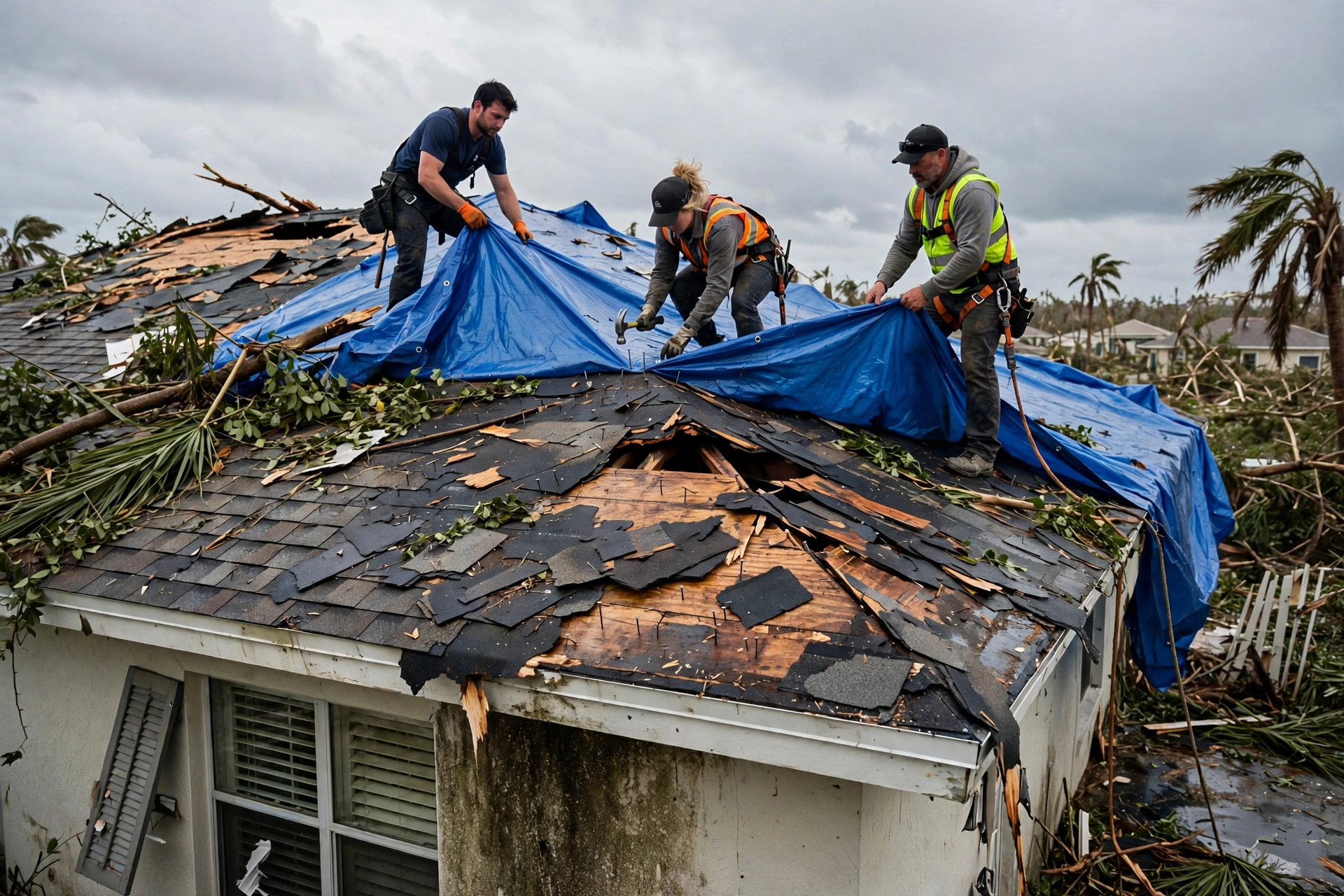
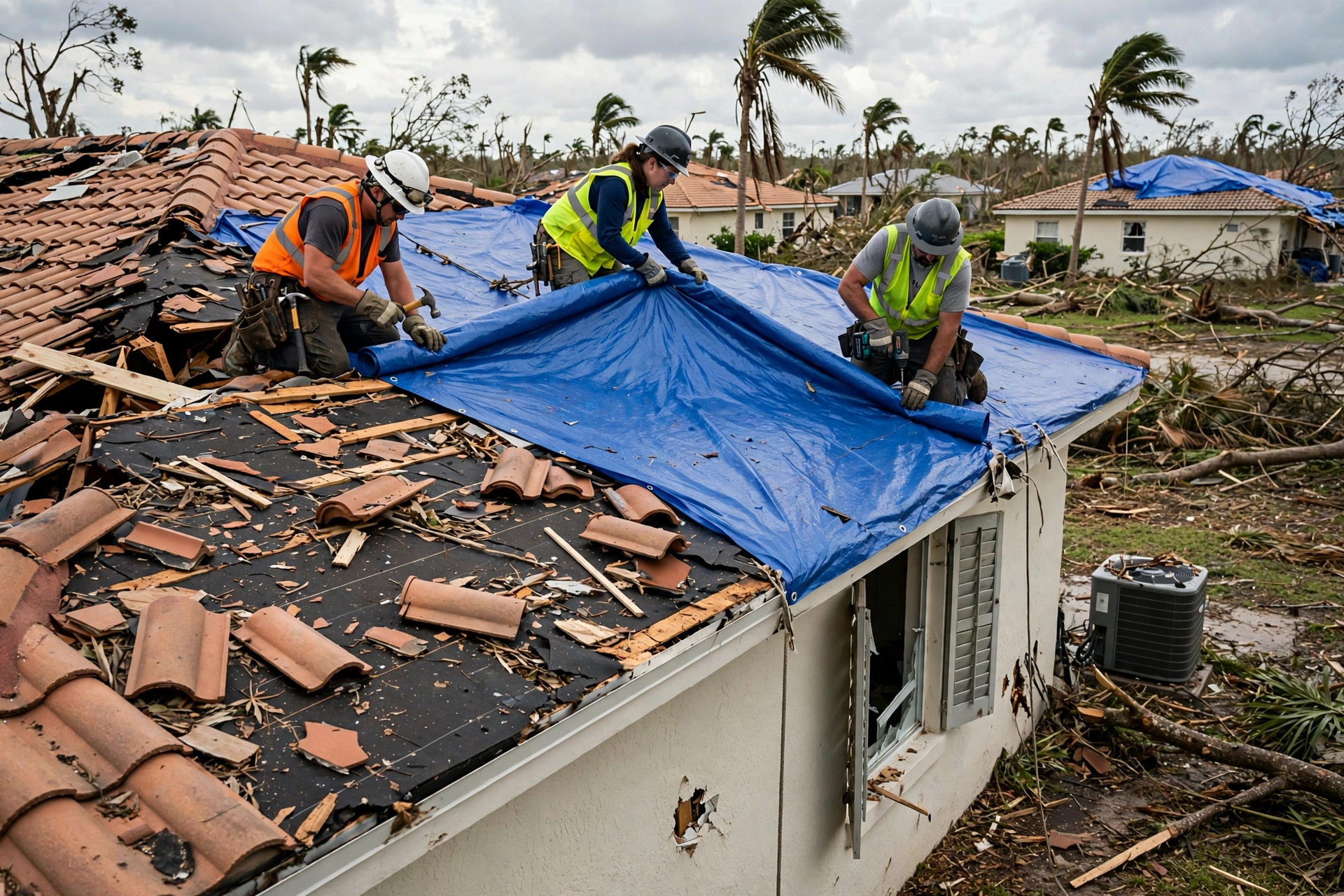
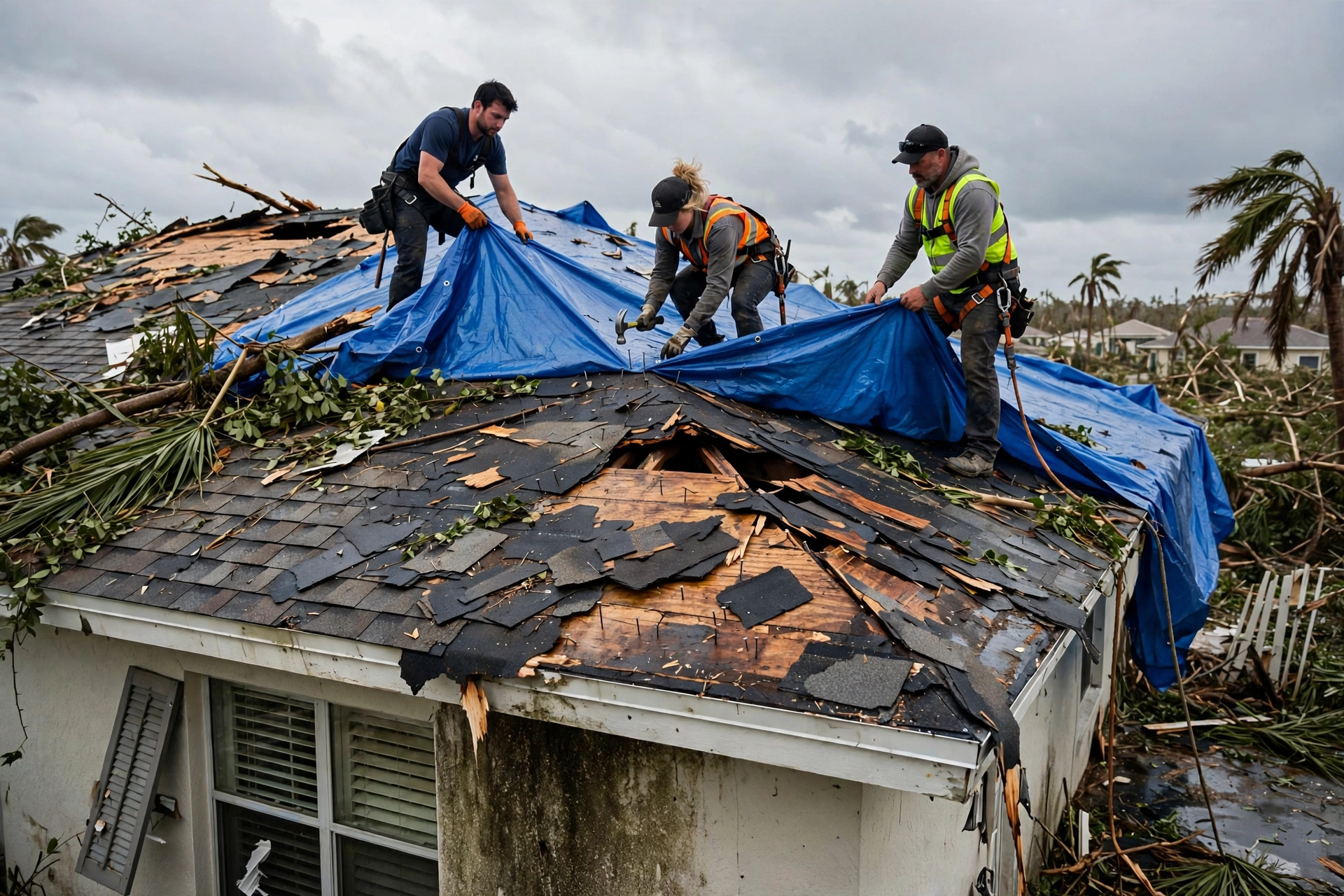
Yes. A professional tarp over a damaged roof section stops the cycle every Florida homeowner fears: one storm opens the roof, then daily afternoon rain pours through for weeks while repairs wait in line. Tarping protects ceilings, insulation, flooring and belongings, and insurers expect it as part of your duty to prevent further damage. A properly installed tarp is anchored without creating new holes wherever possible and is documented for your claim. Our guide to roof tarping after a storm explains when it helps most.
Yes, with the right protocol. Storm surge is treated as contaminated water, so porous materials that absorbed it, like drywall below the water line, insulation, carpet and pad, are removed rather than dried in place. Hard surfaces and structural framing are cleaned, sanitized and then dried to verified meter readings. The finished home is safe and dry, and the documentation package records exactly what was removed and why, which matters for both homeowners and flood claims.
Absolutely, and it is one of the most valuable things you can do. Photograph exterior damage, water lines on walls, every affected room, and the roof from the ground if it is safe. Video walkthroughs with narration help too. Take photos before tarping, before extraction, and before anything is thrown away. Adjusters make decisions from documentation, and after a major storm, yours may be reviewed weeks later by someone who never visits the property.
Most Florida homeowners policies carry a separate hurricane deductible that applies instead of the standard deductible when a named hurricane causes the loss. It is usually 2, 5 or 10 percent of the home's insured value, not of the claim, so on a $400,000 home a 2 percent hurricane deductible is $8,000 out of pocket before insurance pays. It typically applies once per hurricane season. Knowing your percentage before storm season is part of being prepared.
As soon as roads are passable and local authorities allow access. After a major landfall, every restoration company in Florida is flooded with calls, so response is triaged: occupied homes with active intrusion, electrical hazards and vulnerable residents go first. Calling early puts you in the queue, and tarping plus extraction can often start on the first visit so your home stops getting wetter while full repairs are scheduled. Check the cities we serve on our service areas page.
Run a full post-season walkthrough in December: attic and roof for stains and damp insulation, top-floor ceilings for faint rings, window and door seals, garages and low rooms, AC drain pans, and outside drainage. Document everything with dated photos, because Florida gives you one year from the date of loss to report a hurricane claim and 18 months for supplemental claims. December is dry season, so moisture readings are clean and drying runs faster. Our post-season checklist covers all seven checks step by step.
Storm water in your home?
Tarping, extraction and verified drying, documented for both homeowners and flood claims. Call now to get in the queue.
Call 24/7: (607) 300-1334