Offices and office parks
Supply line failures, roof leaks and HVAC condensate floods, dried in phases so unaffected suites stay open. Server rooms and records storage get priority protection and monitoring.
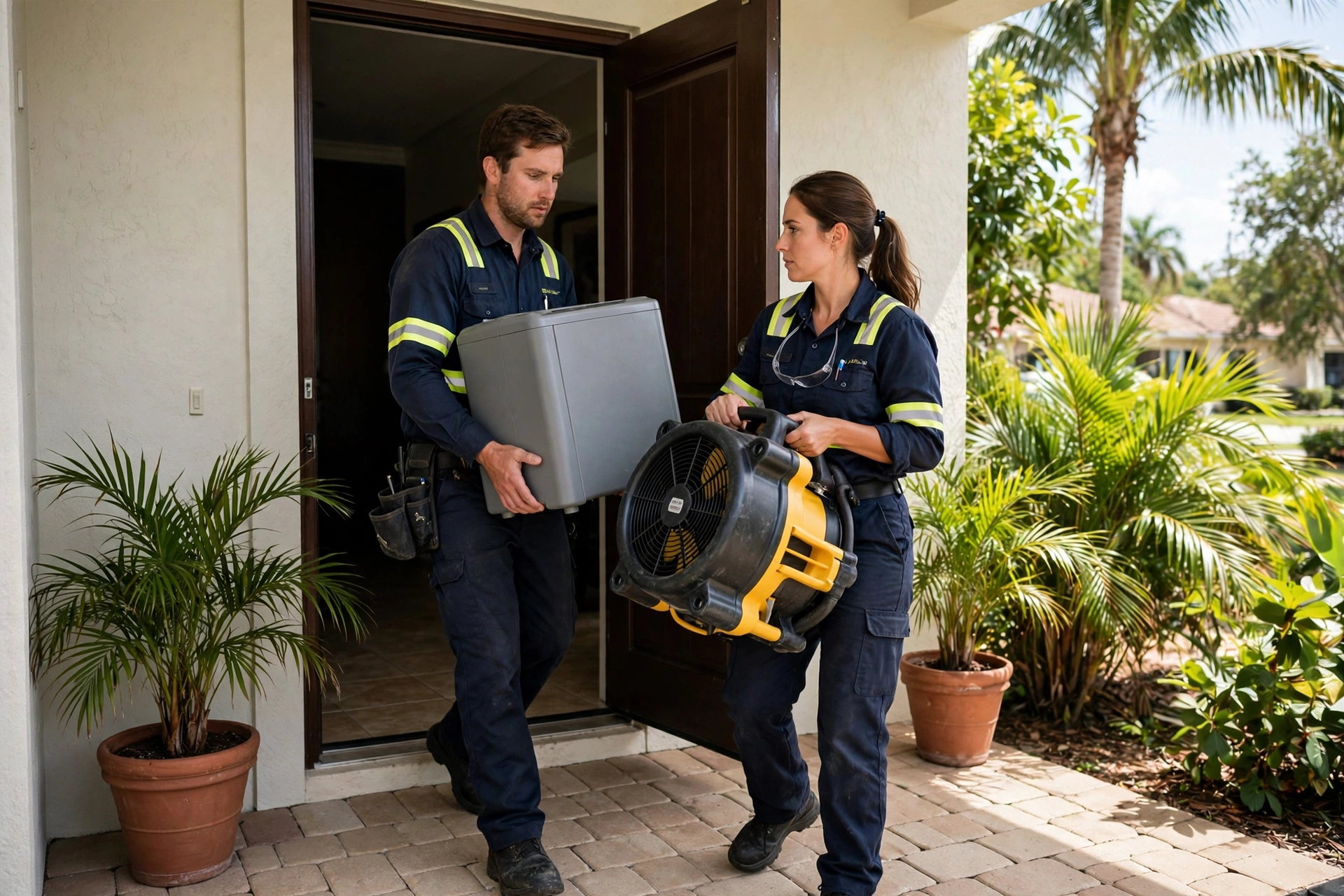
A flooded office, store or restaurant loses money every hour it stays closed. Our commercial crews extract, dry and document large-scale water losses around the clock, working after hours and in phases so your business keeps operating.
DryOut Inc restores water damage in Florida commercial properties of every size, from a single flooded office suite to multi-floor apartment buildings and hotel properties. Call (607) 300-1334 for 24/7 commercial response. We run large-scale water extraction and drying, phase the work around your operating hours, keep public areas safe and code-compliant, and deliver claim-ready documentation for your insurer or property management company.
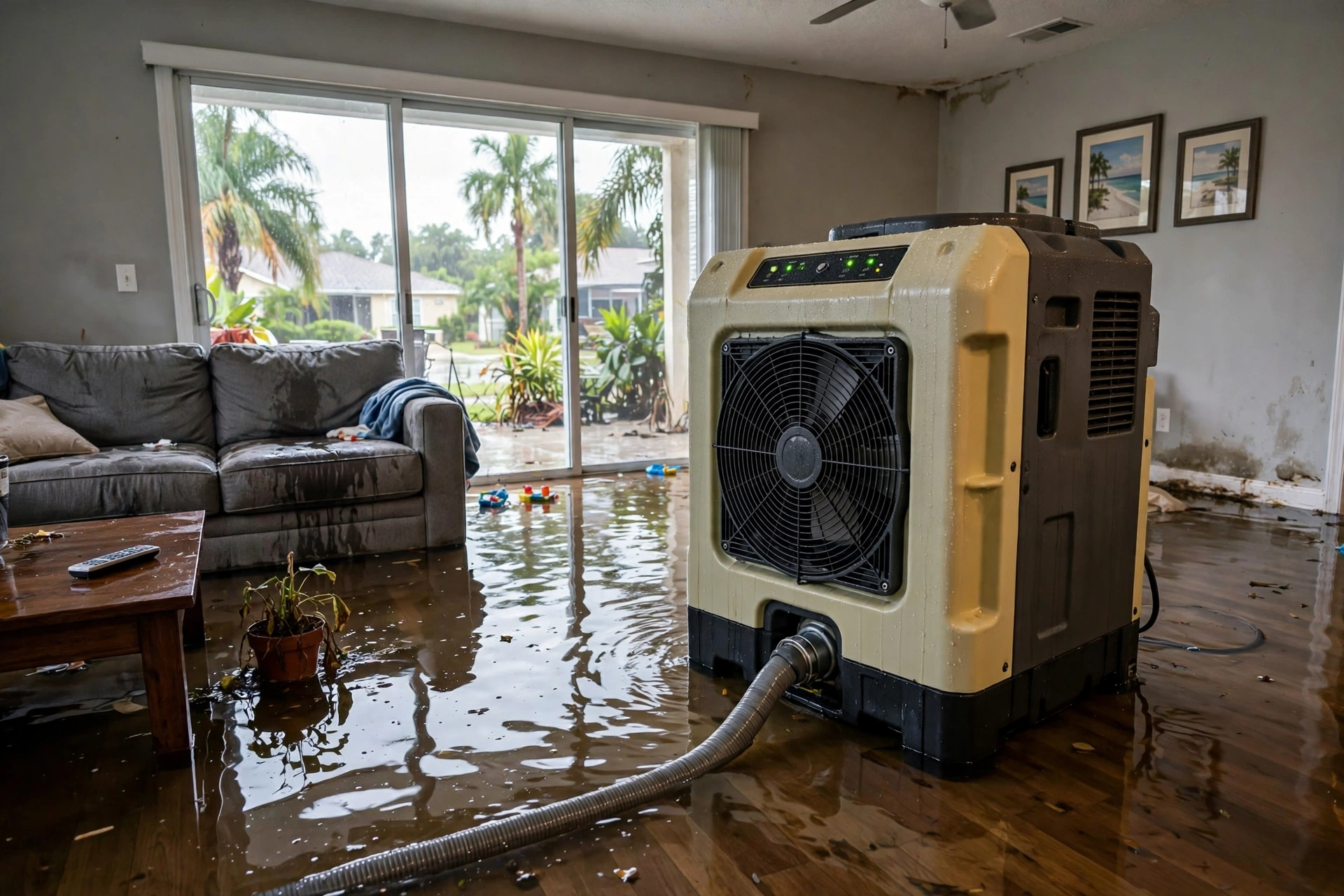
For a business, water damage is never just a repair bill. It is closed doors, cancelled bookings, idle staff and tenants who cannot use space they are paying for. Downtime on even a mid-size property can run to thousands of dollars a day, and that clock starts the moment water hits the floor. Commercial restoration is therefore planned backwards from one question: what has to be dry, safe and documented before people can come back?
Commercial losses also behave differently from a flooded house. Water travels through shared walls, elevator shafts and the space above drop ceilings, so a leak on the fourth floor becomes a claim on the second. Sprinkler discharges, warehouse roof failures and chilled-water line breaks can release thousands of gallons. Our commercial teams bring truck-mounted extraction, high-capacity dehumidification and enough air movers to dry open floor plans and multi-unit stacks properly, not just single rooms.
Reviewed by the DryOut Inc team · Last updated October 2026
Every property type fails differently and reopens differently. These are the commercial water losses we plan for most often.
Supply line failures, roof leaks and HVAC condensate floods, dried in phases so unaffected suites stay open. Server rooms and records storage get priority protection and monitoring.
After-hours extraction and drying that protects inventory, fixtures and flooring, planned around trading hours with the goal of reopening the next day whenever the loss allows.
Water in kitchens and dining rooms raises sanitation questions immediately. We remove contaminated materials, dry the structure, and document the work your health inspector will ask about.
Large open floors need large equipment. Truck-mounted extraction and desiccant drying handle slab-wide water from roof failures, sprinkler breaks and loading dock flooding.
Every flooded room is lost revenue. We dry room by room, control noise and odor, and coordinate with your front desk so guests are never routed through a work zone.
One leak can affect a whole stack of units. We coordinate access with management and residents, deliver structural drying to multiple units in parallel, and keep one documentation file for the entire loss.
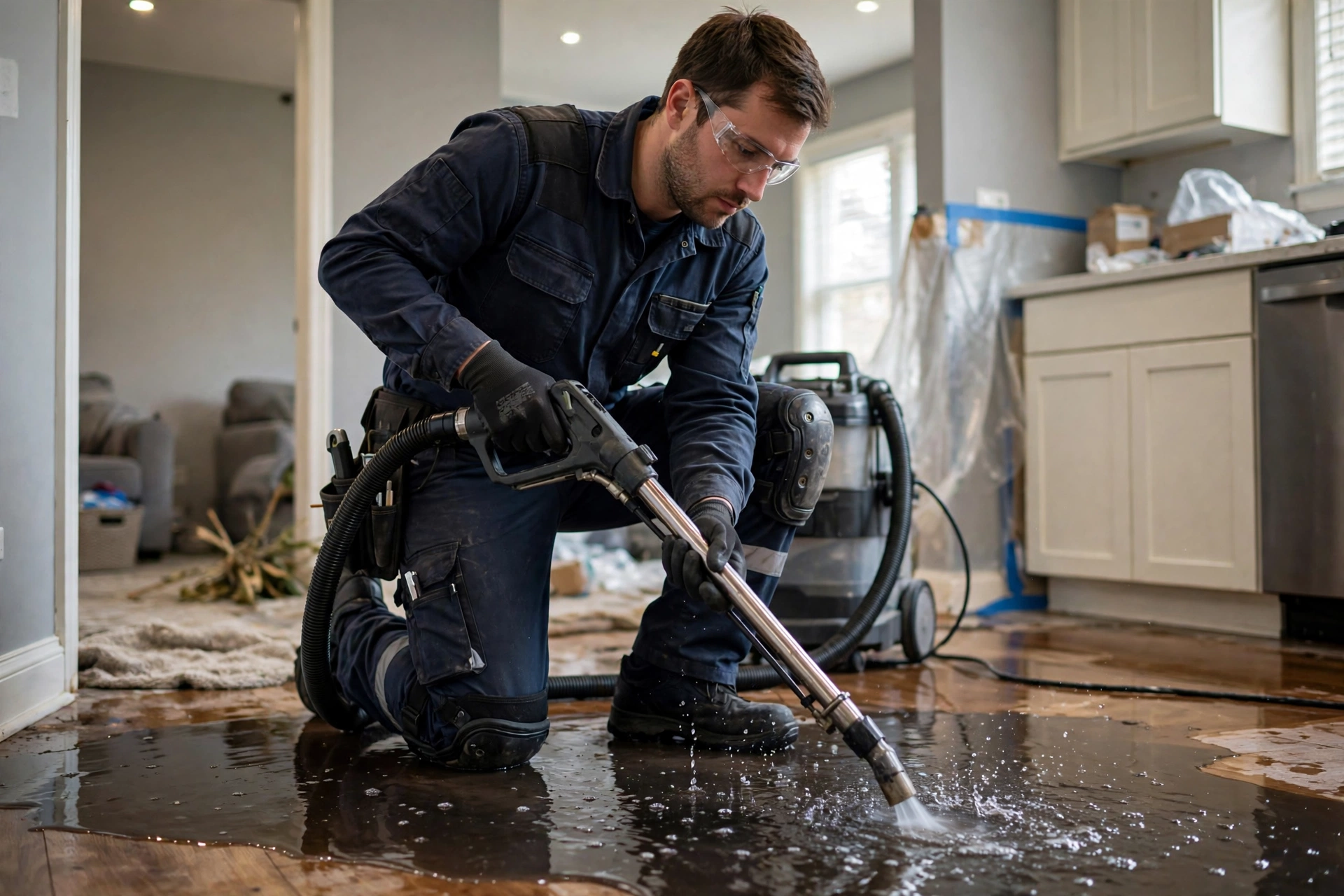
Most commercial losses do not require a full shutdown. We divide the building into zones, dry one zone at a time, and hand each zone back as soon as moisture readings verify it is dry. Work that cannot happen during business hours is scheduled at night or on weekends.
If your situation is active right now, our 24/7 emergency restoration dispatch treats commercial calls as priority, because every hour of delay is revenue.
A process built for occupied buildings, multiple stakeholders and auditable records.
Response and recovery planning by property type. Every timeline starts with a free on-site assessment.
| Property type | First response | Typical path back to operation |
|---|---|---|
| Office suite | 60-minute target in core areas | Extraction on the first visit, phased drying over 3 to 5 days, most suites fully usable within a week |
| Retail store | 60-minute target in core areas | After-hours extraction and targeted drying, reopening often possible in 2 to 4 days for contained losses |
| Restaurant | Priority dispatch, safety first | Contaminated materials out on day one, drying 4 to 7 days, reopening follows your inspection clearance |
| Warehouse | Same-day assessment statewide | Large-scale extraction over 1 to 2 days, desiccant drying while operations shift into dry zones |
| Hotel | 24/7, coordinated with front desk | Room-by-room drying, affected rooms typically returned to inventory in 3 to 6 days |
| Apartment building | Multi-unit crews sent together | Parallel drying across units with common areas prioritized, full dry-out usually 5 to 10 days |
Timelines depend on water volume, category and materials. Category 3 contamination and multi-floor losses sit at the longer end of every range above.
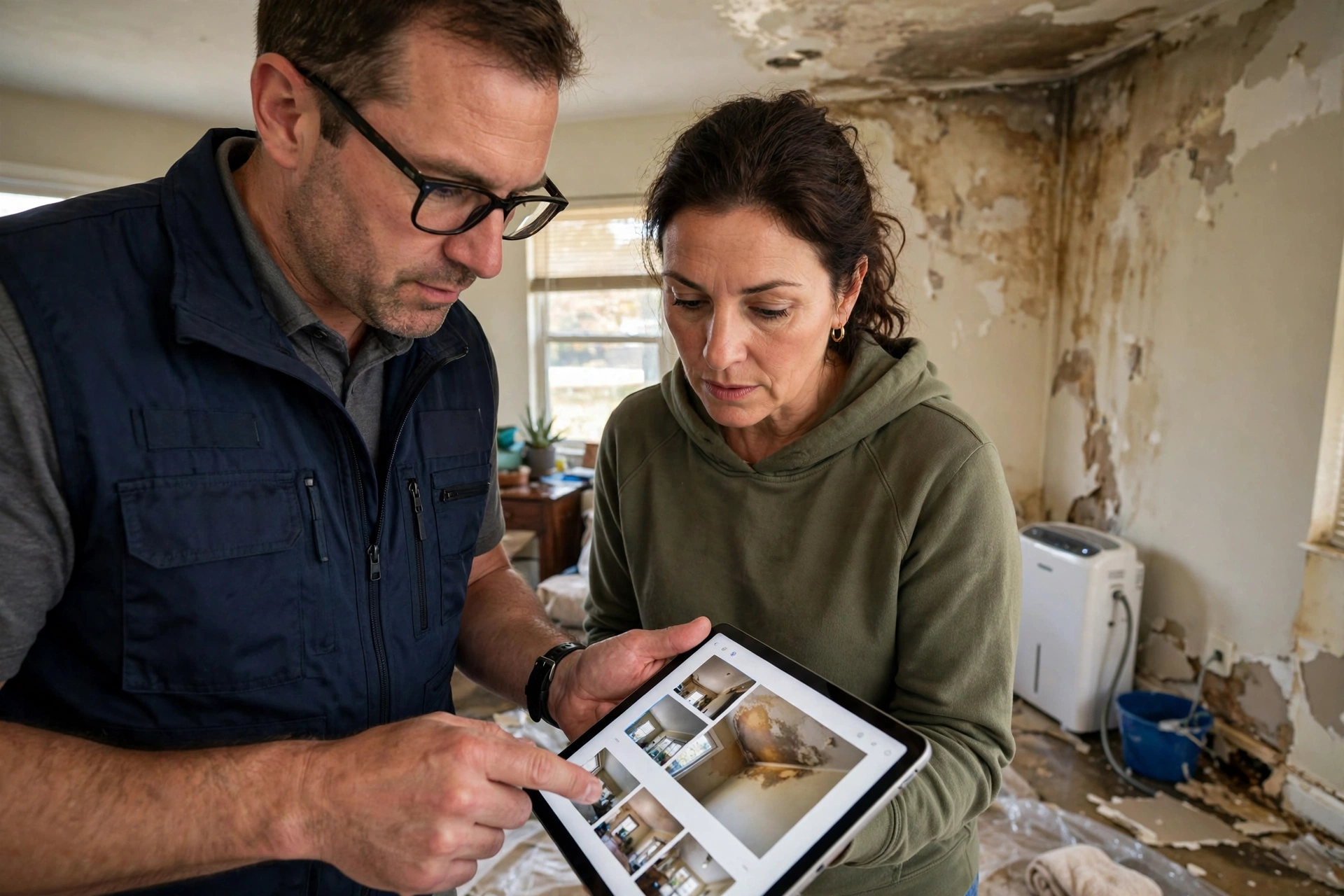
Commercial carriers audit water claims closely, and the file is built while the work happens, not reconstructed later. Every DryOut Inc commercial job produces dated photos, daily moisture logs, an itemized Xactimate scope, and a record of every material removed and why. Our insurance claims assistance team works directly with your adjuster so your staff are not pulled into paperwork.
Two Florida rules shape commercial claims. Assignment of benefits agreements are banned for policies issued or renewed after January 1, 2023, so your contract is directly with us and billing stays transparent. And for hurricane losses, Florida gives policyholders one year from the date of loss to give notice of a claim, and 18 months to file a supplemental claim if more damage surfaces.
Property managers running portfolios across Miami, Orlando, Tampa and beyond get one point of contact, pre-agreed rates and priority dispatch through a portfolio agreement. Browse all 293 Florida service areas or request a commercial assessment for your properties.
Yes. Commercial drying is routinely scheduled at night and on weekends, and work is phased by zone so unaffected parts of the building stay open. Containment barriers separate the work area from customers and staff, and zones are released back to you as soon as they verify dry.
One project manager coordinates access with your management team and each tenant, dries affected units in parallel, and keeps a single documentation file with per-unit moisture readings and photos. That gives owners, tenants and insurers one clear record of the whole loss.
Yes. Contaminated water, classed as Category 3, requires full protective equipment, removal of porous materials that absorbed it, disinfection of hard surfaces, and documented disposal. Public areas cannot reopen until the space is cleaned, sanitized and verified dry.
Carriers expect moisture logs, dated photos, an itemized Xactimate scope, and records of every material removed and why. We produce that file as the job runs, not after the fact. Florida policyholders generally have one year from the date of loss to report a hurricane claim and 18 months to file a supplemental claim.
Yes. Portfolio clients get a priority response commitment, pre-agreed rates, and a single point of contact across every property. Contact us to set up a commercial assessment and agreement before storm season, not during it.
Cost depends on square footage affected, water category, and materials involved. A contained office suite loss may run a few thousand dollars, while multi-floor or warehouse losses can reach tens of thousands. Every commercial job starts with a free on-site assessment and a written scope and price range before major work begins.
Managing a home instead of a business? See our residential water damage restoration page for homeowners.
Get a free commercial assessment and a written reopening plan from Florida's water damage team, day or night.
Call 24/7: (607) 300-1334