Clogged condensate drain line
The most common failure by far. Algae and biofilm grow inside the drain line in Florida's heat, narrowing it until the condensate backs up into the pan and overflows into the closet, wall or ceiling.
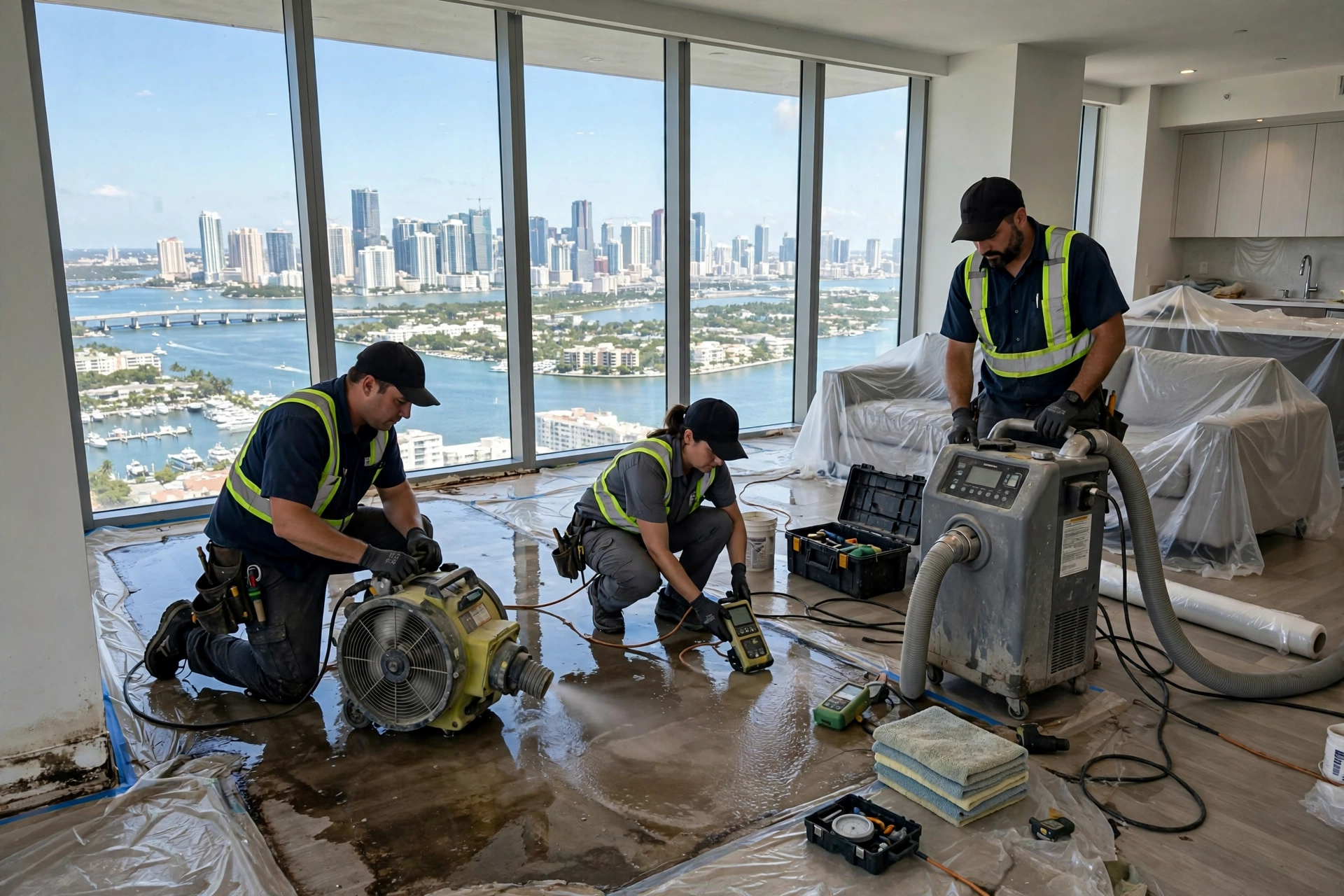
Florida ACs run nearly year-round and produce gallons of condensate daily. When the drain line clogs, the water floods quietly for weeks. We find it, dry it and fix the damage.
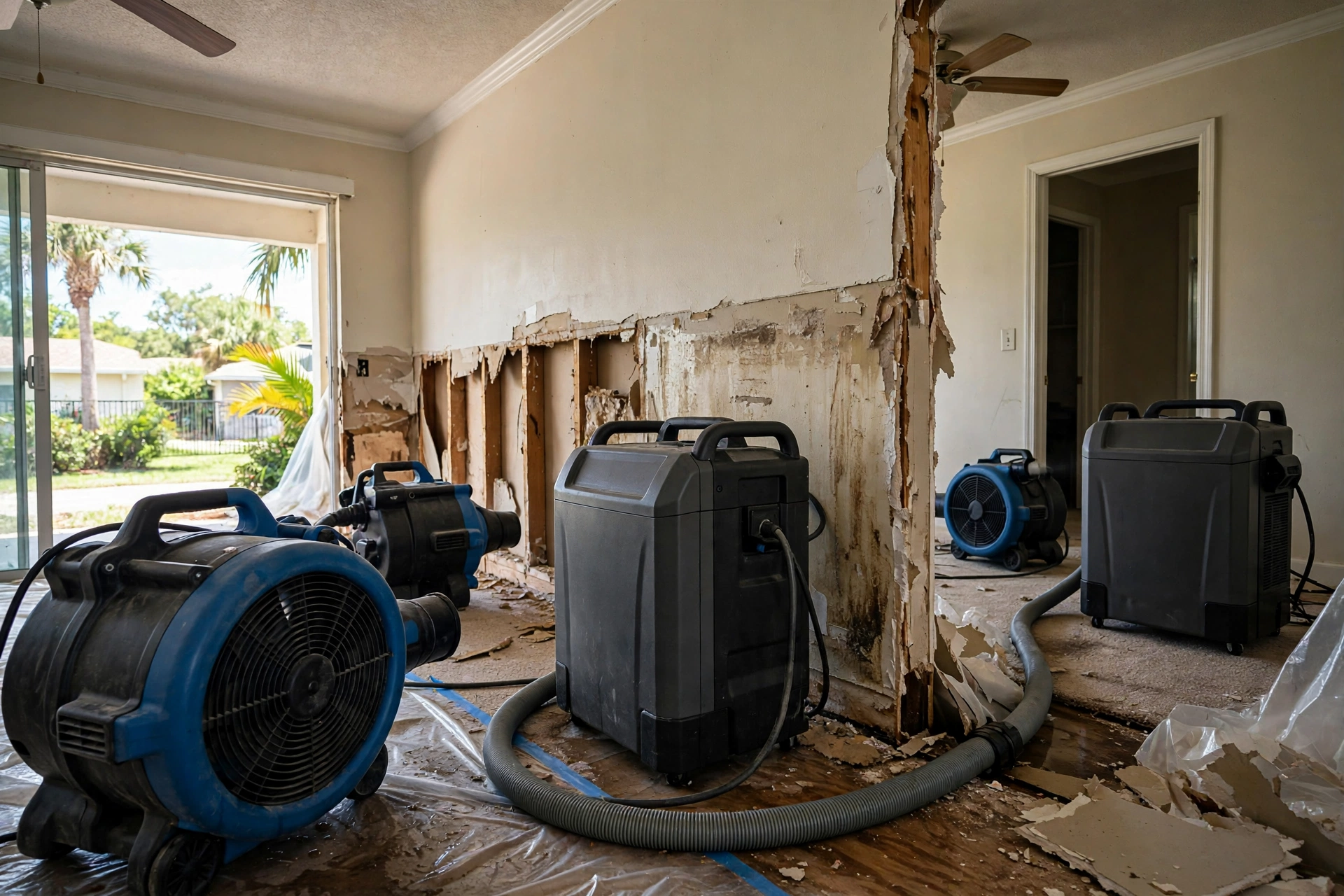
An air conditioner removes gallons of moisture from Florida's humid air every day, and all of it drains through a condensate line to the outside. When that line clogs with algae or the drain pan overflows, the water backs up into the air handler closet, wall cavities and ceilings below. Because air handlers hide in closets, garages and attics, the damage usually runs silently for weeks. Restoration means finding the full wet footprint with moisture meters, drying the structure to verified standards, and repairing the materials the slow leak ruined.
Everything about the Florida AC setup invites slow disasters. Systems run ten months a year in many homes, producing condensate almost constantly. Drain lines clog with algae and biofilm, secondary pans rust through or were never installed, and the float switches that should shut the system down when the pan fills are often missing or disconnected. Add an air handler sitting above a garage or on the second floor, and one clogged line can ruin the rooms below.
The damage signature is distinctive: musty odors near the air handler closet, soft baseboards in adjacent walls, stained ceilings below attic units, and sometimes a pan that is bone dry in the closet while water runs inside the wall. By the time a Florida homeowner notices, the leak has typically been active for weeks, and in our humidity mold can begin within 24 to 48 hours of the first wetting.
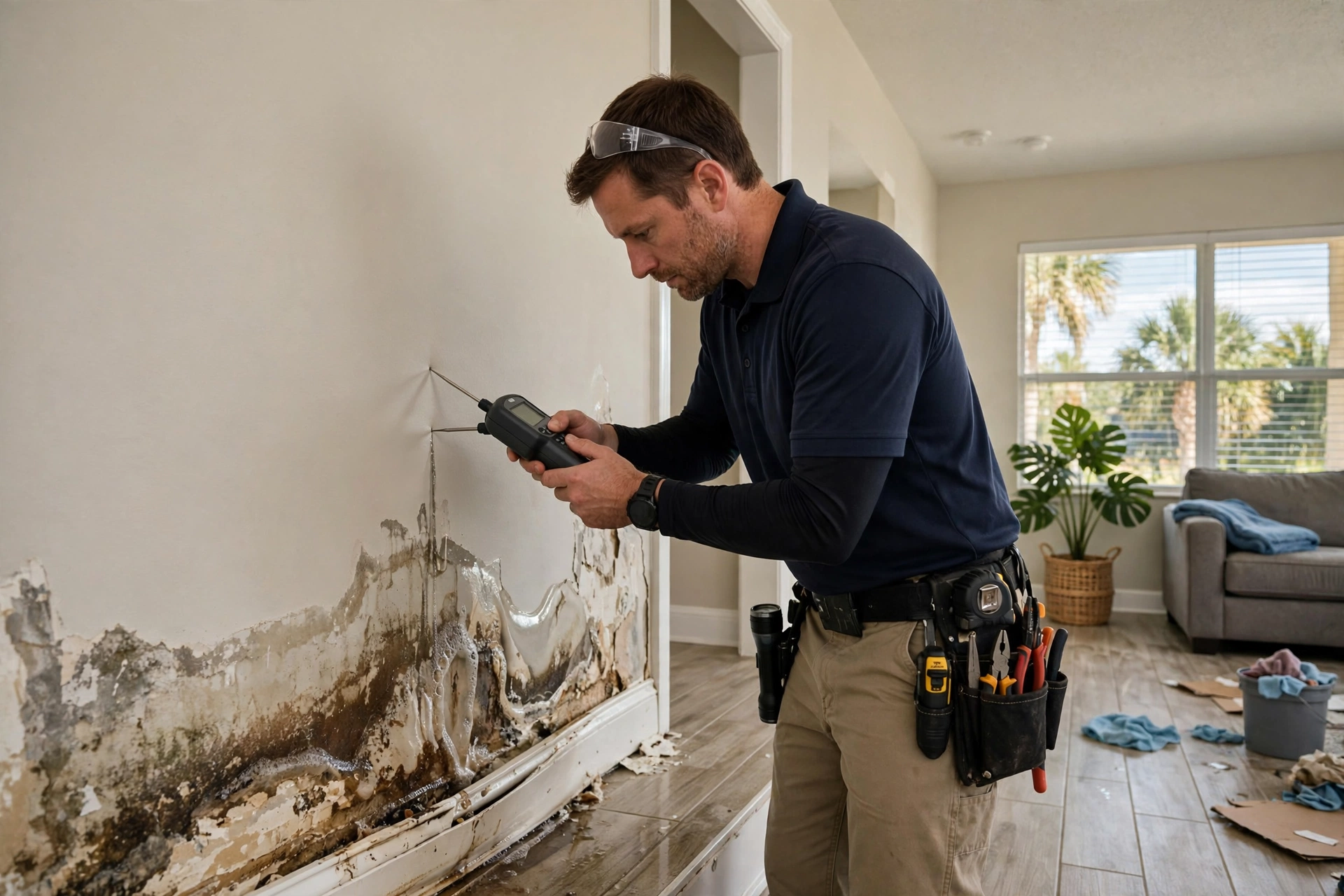
Every condensate leak we restore in Florida comes from one of these five failures, or a combination.
The most common failure by far. Algae and biofilm grow inside the drain line in Florida's heat, narrowing it until the condensate backs up into the pan and overflows into the closet, wall or ceiling.
The emergency pan under attic and closet units is supposed to catch overflows, but many are rusted through or were never installed. When the primary pan overflows, the water goes straight into the ceiling below.
The safety float that should shut the AC off when the pan fills is absent or wired incorrectly in many homes we visit. The system keeps running and keeps overflowing for weeks.
A condensate line without a proper trap and vent lets air pressure fight the drain, so condensate backs up even when the line is clear. This is an installation defect we find in newer and renovated homes alike.
PVC condensate lines get bumped in attics, crack at joints from thermal cycling, or separate from the air handler connection, dumping water directly into the surrounding structure.
Low refrigerant or restricted airflow freezes the evaporator coil; when it thaws, the sudden rush of water overwhelms the pan and drain line at once, flooding the surrounding area in hours.
The cheapest service call in Florida is the annual AC maintenance that includes drain line cleaning. These are the specifics we recommend.
| Action | How often | Why it matters |
|---|---|---|
| Clean the condensate drain line | Every 6 to 12 months | Removes the algae and biofilm that cause most clogs |
| Pour vinegar or condensate tablets in the line | Monthly in cooling season | Discourages algae growth between professional cleanings |
| Test the float switch | Each season | Confirms the safety shutoff actually shuts the system down |
| Inspect the secondary pan | Yearly | Rust-through means the backup plan has already failed |
| Change air filters | Every 1 to 3 months | Restricted airflow contributes to coil freeze and overflow events |
| Watch for the early signs | Ongoing | Musty closet odor, ceiling stains below units, and unexplained humidity are the early warnings |
Already seeing signs? Our free inspection maps the hidden damage before it spreads, and our claims assistance documents slow leaks correctly for your insurer.
Watch for musty odors near the air handler closet, stained or soft baseboards in nearby walls, water in the secondary pan, unexplained humidity, and ceiling stains below attic-mounted units. Any of these in Florida deserves a moisture check, because the visible symptom is almost never the full extent.
Condensate starts relatively clean, but a clogged drain line grows algae and biofilm, and water sitting in pans and walls picks up contaminants as it goes. Long-running AC leaks often arrive at Category 2 by the time they are found, which is why the drying plan includes proper cleaning of affected areas.
Florida policies commonly cover sudden AC overflow events, but coverage for slow leaks that ran for weeks can be disputed as a maintenance issue. This is why documenting the discovery date, the conditions found, and the response is critical, and why our inspection report matters for your claim.
Drying the air handler area and affected walls typically takes three to five days once the HVAC source is fixed. Drywall, baseboard and paint repairs add several days. Most residential AC leak jobs complete within one to two weeks total.
Call us first for the water damage, and we will tell you honestly whether you also need HVAC work before drying can succeed. We coordinate with licensed HVAC technicians to clear the line or replace the pan, but the moisture mapping, drying and restoration is our scope.
Most AC leaks run silently for weeks before anyone notices. Get a free inspection and find out exactly what got wet.
Call 24/7: (607) 300-1334