Water Damage Insurance FAQ: Florida Deadlines and Documentation
What to document, the one-year claim deadline, the 18-month supplemental window, the Assignment of Benefits ban, and how Xactimate scopes keep claims moving.
One year to report. Eighteen months to supplement.
Florida homeowners generally have one year from the date of loss to notify their insurer of a water damage claim, and up to 18 months to file a supplemental claim for additional related damage. Assignment of Benefits agreements are prohibited on policies issued or renewed after January 1, 2023, so your claim stays in your name and under your control.
Most failed water damage claims do not fail on the damage itself. They fail on paperwork: late notice, no photos, no moisture records, or a scope the adjuster cannot verify. The questions below explain exactly what documentation wins claims, and how our insurance claims assistance builds that package on every job.
How Florida water damage claims actually work
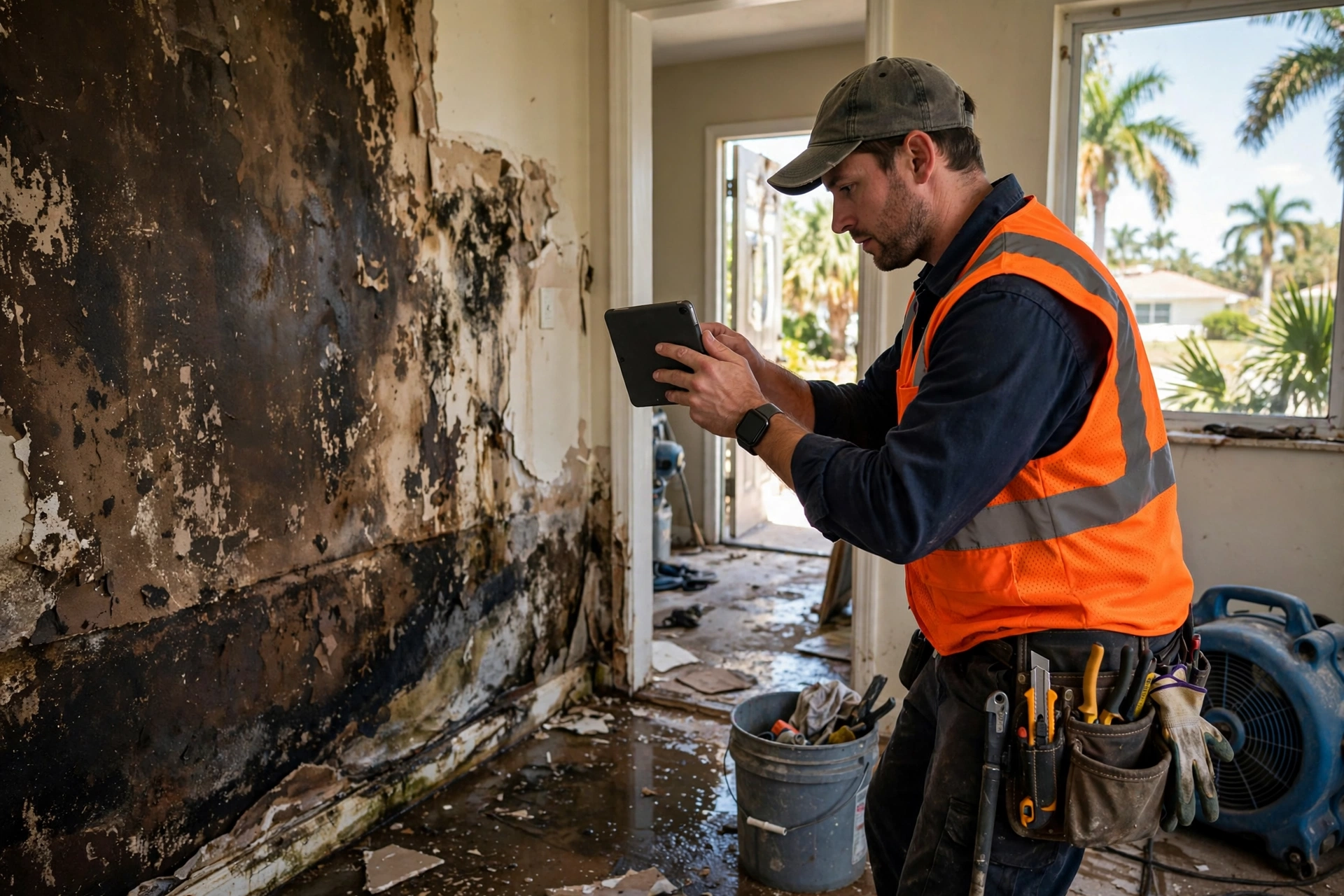
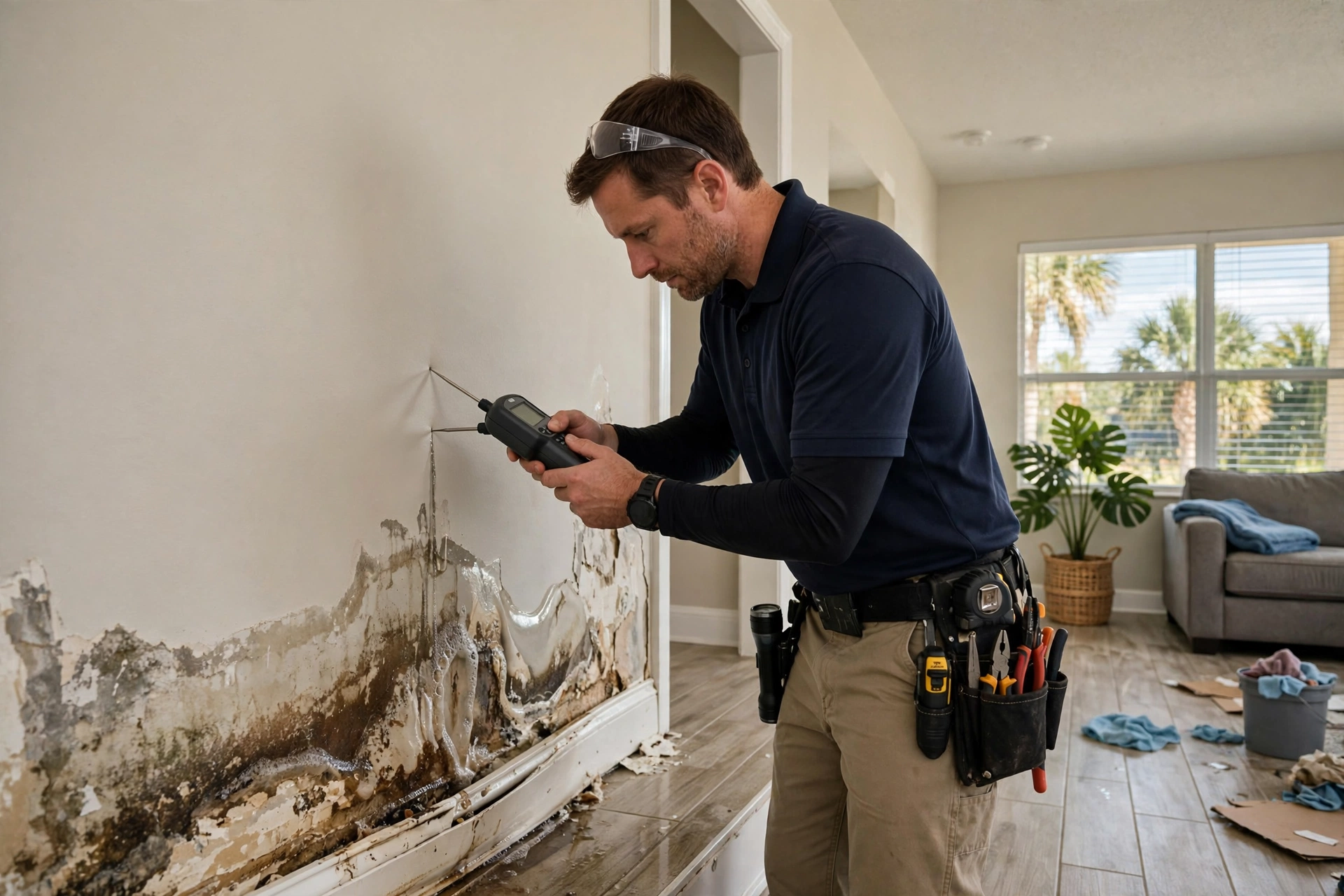
Your insurer needs proof of the cause, the date of loss, and the full extent of the damage. That means time-stamped photos and video of the water and the affected rooms before cleanup, photos of the failed part or source, moisture readings showing how far the water traveled, a line-item scope of work, and records of your emergency mitigation. DryOut Inc builds this package on every job: photos, moisture logs, daily drying records and an itemized scope, ready to hand to your adjuster.
Under current Florida law, homeowners generally have one year from the date of loss to give their insurer notice of a property damage claim. Miss that window and the claim can be denied outright, no matter how strong the damage is. Report much sooner in practice: evidence is fresher, the adjuster's inspection is easier to schedule, and late reporting invites disputes about when the damage really happened.
A supplemental claim asks your insurer to pay for additional damage that is part of the same loss but was discovered or documented after the original claim. In Florida you generally have up to 18 months from the date of loss to file one. Supplemental claims are common in water damage, because hidden moisture inside wall cavities or under flooring often only becomes visible during demolition or drying. Good documentation from day one is what makes a supplemental claim succeed.
An Assignment of Benefits used to let a contractor step into your shoes and deal with, or sue, your insurer in your name. For Florida homeowners policies issued or renewed after January 1, 2023, AOB agreements are prohibited. You keep control of your claim and your insurer pays you directly. Any contractor who asks you to sign an AOB on a current policy is asking for something Florida law no longer allows.
Xactimate is the estimating software most Florida insurers and adjusters use to price property repairs line by line, with standardized labor and material rates for your area. When your restoration company scopes the job in Xactimate too, both sides speak the same language: the same line items, the same units, the same pricing basis. That alignment removes most scope disputes before they start and speeds up claim approvals.
You pay the deductible, and the insurer pays covered costs above it. Many Florida policies have two deductibles: a standard all-perils deductible and a separate hurricane deductible, usually calculated as a percentage of the home's insured value, that applies to hurricane-caused losses. For a burst pipe, the standard deductible applies. Check your declarations page or ask your agent which deductible your loss falls under before assuming the numbers.
Yes, start emergency mitigation right away. Your policy actually requires you to prevent further damage, and waiting days for an adjuster while water sits in your walls will grow the loss and can itself become a coverage problem. The safe approach: photograph and video everything first, keep damaged materials and failed parts for the adjuster to see, and let the restoration crew extract and start drying. Mitigation now, full documentation, adjuster visit on a stabilized property.
First, get the denial reason in writing and compare it against your restoration documentation. Many water claim disputes are really documentation gaps: no proof of the date of loss, no readings showing hidden damage, or a scope written differently from the adjuster's. A well-documented supplemental submission often reopens an underpaid claim. You can also request re-inspection, use your policy's appraisal process, or consult a Florida public adjuster or attorney for larger disputes.
Yes. We send your adjuster the full documentation package, meet them on site when needed, and scope the work in Xactimate so estimates align. Because Assignment of Benefits is banned on current Florida policies, the claim stays in your name and the insurer pays you, not us. We support your claim with evidence and communication; you stay in control of every decision. See our insurance claims assistance page for how the process runs.
Damage documented right, from hour one
Photos, moisture logs and an Xactimate scope are built into every DryOut Inc job at no extra charge. Get your free inspection started.
Call 24/7: (607) 300-1334