Hurricane Season Ends November 30: The Post-Season Water Damage Checklist
The last storm passes and everyone exhales, but the water damage work is often just starting. Seven checks to run in December that protect your insurance position and stop hidden damage from compounding through winter.
The Atlantic hurricane season officially ends November 30. After that date, walk your whole home for hidden water damage, document everything with dated photos, confirm your claim deadlines, and schedule repairs in the dry season. The most expensive losses we see each December are not from storms. They are from storm damage discovered three months too late.
Why does the real water damage check happen after November 30?
During a season, most attention goes to the visible storm: the downed fence, the lifted shingles, the water line on the garage wall. But the slow leaks that matter most for your house, rain pushed under flashing, water wicked into wall cavities, a roof nail that backed out in August winds, announce themselves months later as ceiling stains, soft drywall, and musty closets. December, once the season is officially closed, is the right moment for a deliberate walkthrough of the whole envelope, because dry-season humidity is low enough to make moisture readings clean and honest.
What are the 7 post-season water damage checks?
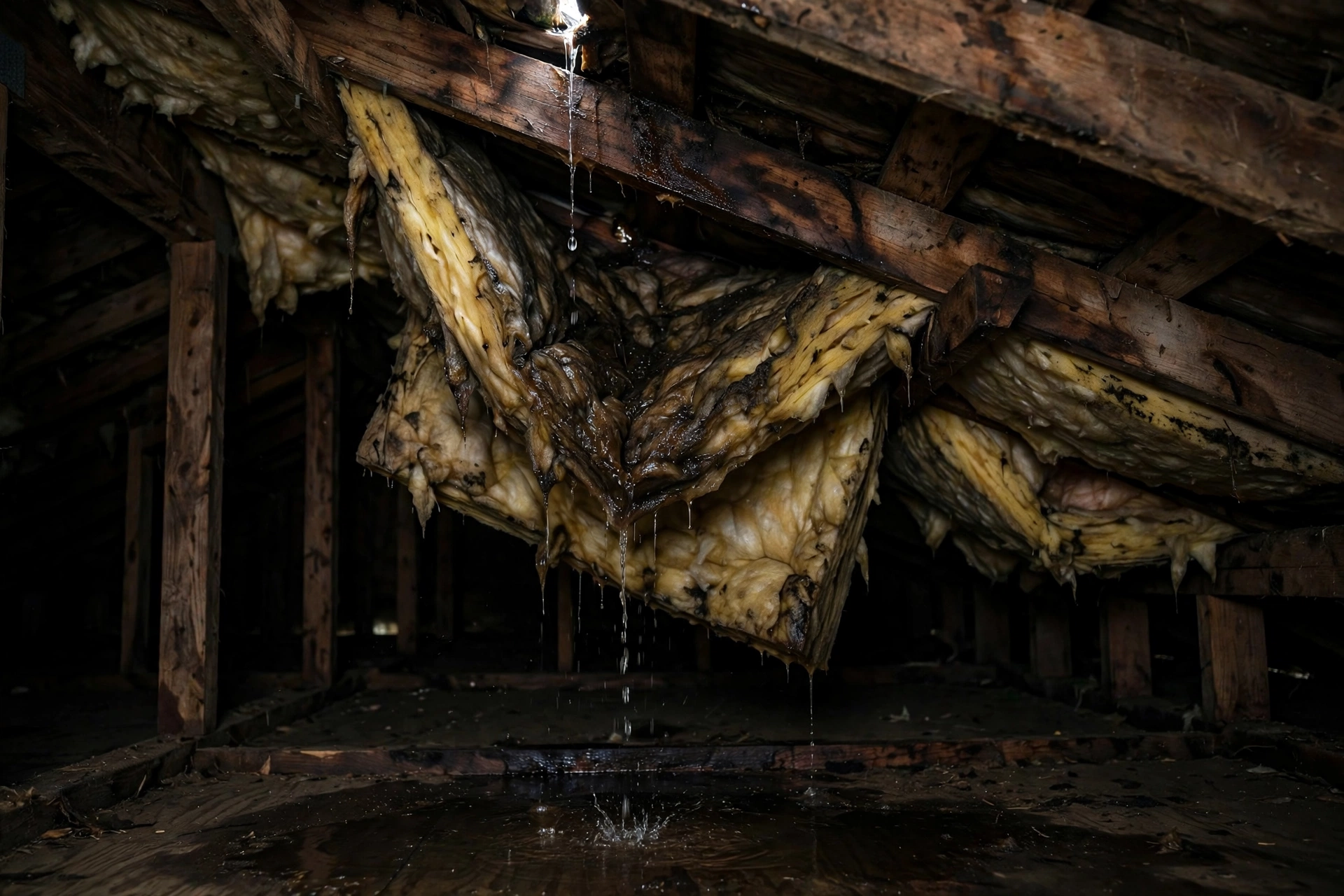
- Attic and roof first. Walk the attic with a flashlight in December. Look for stained decking, damp insulation, daylight around penetrations, and musty odor. Most hidden roof leak damage we find in winter started as a small summer intrusion.
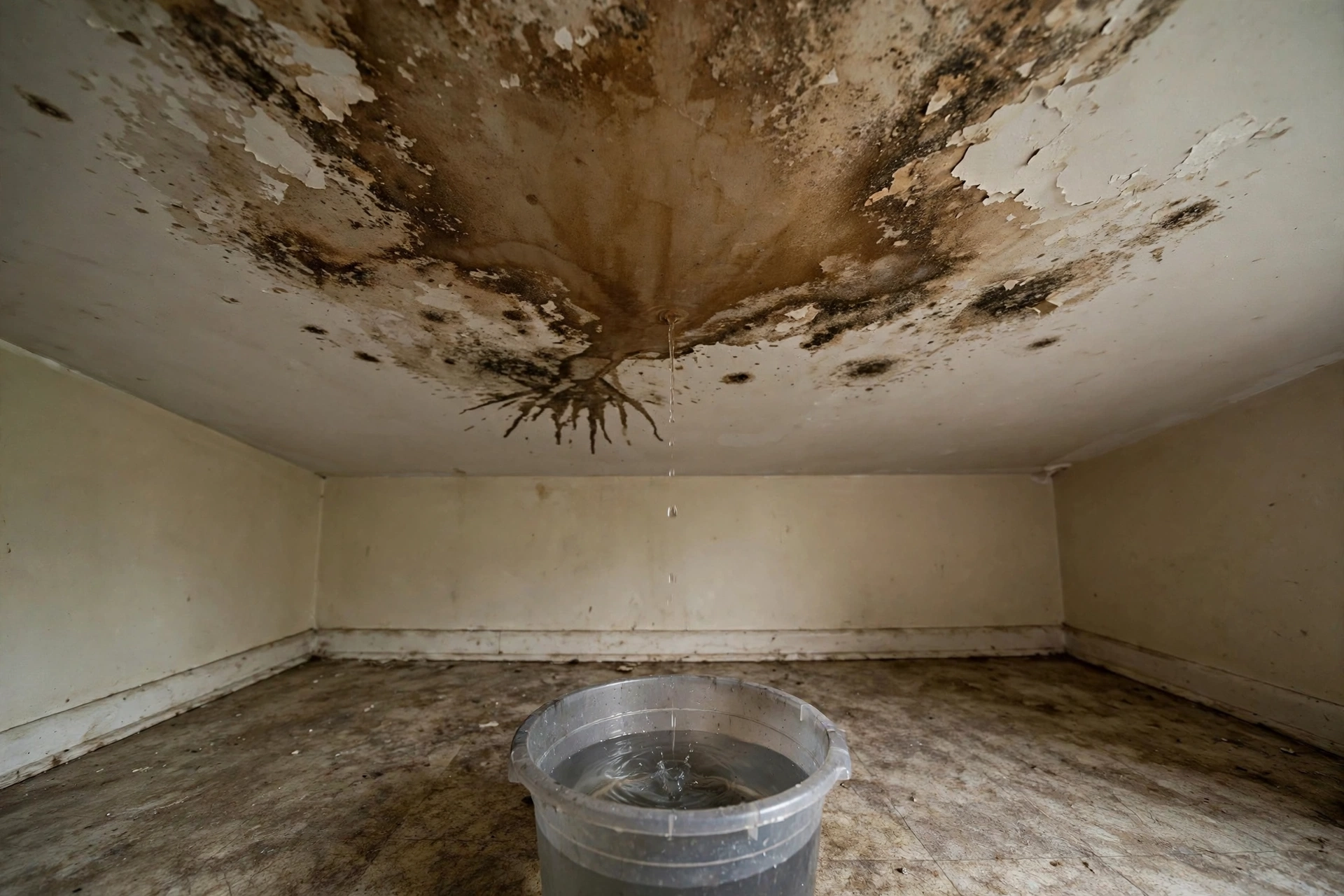
- Ceilings on the top floor. Check every ceiling under a roofline, especially around recessed lights and vents. A faint yellow ring now is a small repair; the same ring in April is soaked insulation and a mold job.
- Window and door frames. Wind-driven rain finds every failed seal. Run a hand along frames and sills for swelling, peeling paint, or damp drywall below.
- Garages and low rooms. Check where street flooding and surge left moisture in baseboards and stored items. Probe baseboards with a screwdriver; soft spots mean trapped water.
- AC closets and drain pans. The cooling system ran hardest all summer. Look for rusted pans, algae plugs, and damp platforms before the system sits quiet for winter.
- Outside drainage. Clear gutters, downspouts, and grading that storms filled with debris. Dry season is the safe window for grading work, and May storms will test it again.
- Your insurance position. Photograph and date everything you find, even the small stuff. Florida gives you one year from the date of loss to report a hurricane claim and 18 months for supplemental claims, so December documentation protects your right to file later.
What if you found water but the season is over?
Finding damage in December is good news, not bad news, because you caught it in the dry season. Moisture can be mapped precisely now, structural drying runs faster in low humidity, and repairs can be scheduled without competing with storm-season emergency work. Our 24/7 line still runs through the holidays, and free inspections cover the same 293 cities year round.
Which insurance deadlines matter after the season?
Two deadlines decide most post-season claims. First, hurricane claims must be reported within one year of the date of loss, so a tropical system that passed in September gives you until the next September, but only if you can prove when the damage started. That is why dated December photos matter. Second, supplemental claims for damage found after the original claim closed get 18 months. Assignment of benefits agreements are banned for policies issued or renewed after January 1, 2023, so you sign your own restoration contract, which is exactly what our insurance claims help page walks you through.
How do you prep the house for the dry season itself?
December is also the month to get the house dry-season ready: service the AC drain line, test the main water shutoff, photograph each room for insurance records, and review your policy before it renews. Our full dry season guide covers what changes from November through April, and the hurricane checklist is there when June 1 comes back around.
Storm season is over. Hidden damage is not.
Get a free December inspection before small intrusions become spring mold jobs. 293 Florida cities, 24/7.
Call 24/7: (607) 300-1334