Water Restoration Process FAQ: Every Step, Explained
From the free inspection to the final verified walkthrough: how extraction, structural drying, daily monitoring and repairs fit together, and how long each step takes.
Four phases, measured at every step
Professional water damage restoration follows the ANSI/IICRC S500 standard: inspect and map the moisture, extract the water, dry the structure with monitored equipment, then repair and verify. Most straightforward jobs take 3 to 5 days of drying plus a few days of repairs. Nothing moves to the next phase until meter readings say it can.
Homeowners often imagine restoration as fans and guesswork. It is closer to a medical protocol: diagnose with instruments, treat with controlled equipment, check vitals daily, and discharge only when the numbers are right. The questions below walk through each phase of our water damage restoration service.
The four phases of every DryOut Inc job
- Inspection and scopeMoisture mapping with meters, photos, and a written scope with a price range, all free, before any work begins.
- ExtractionStanding and trapped water removed mechanically, source confirmed stopped, furniture protected or moved.
- Structural dryingAir movers and dehumidifiers placed by calculation, monitored daily until readings meet the dry standard.
- Repairs and walkthroughRemoved materials rebuilt, final moisture verification, and a walkthrough with your complete documentation file.
Process questions, answered in depth
A technician finds the water source, walks every affected area, and takes moisture readings with pin and pinless meters, including inside wall cavities where water hides. You get photos of the damage, a plain-language explanation of what is wet and what it means, and a written scope with a price range before any work begins. The inspection is free and carries no obligation.
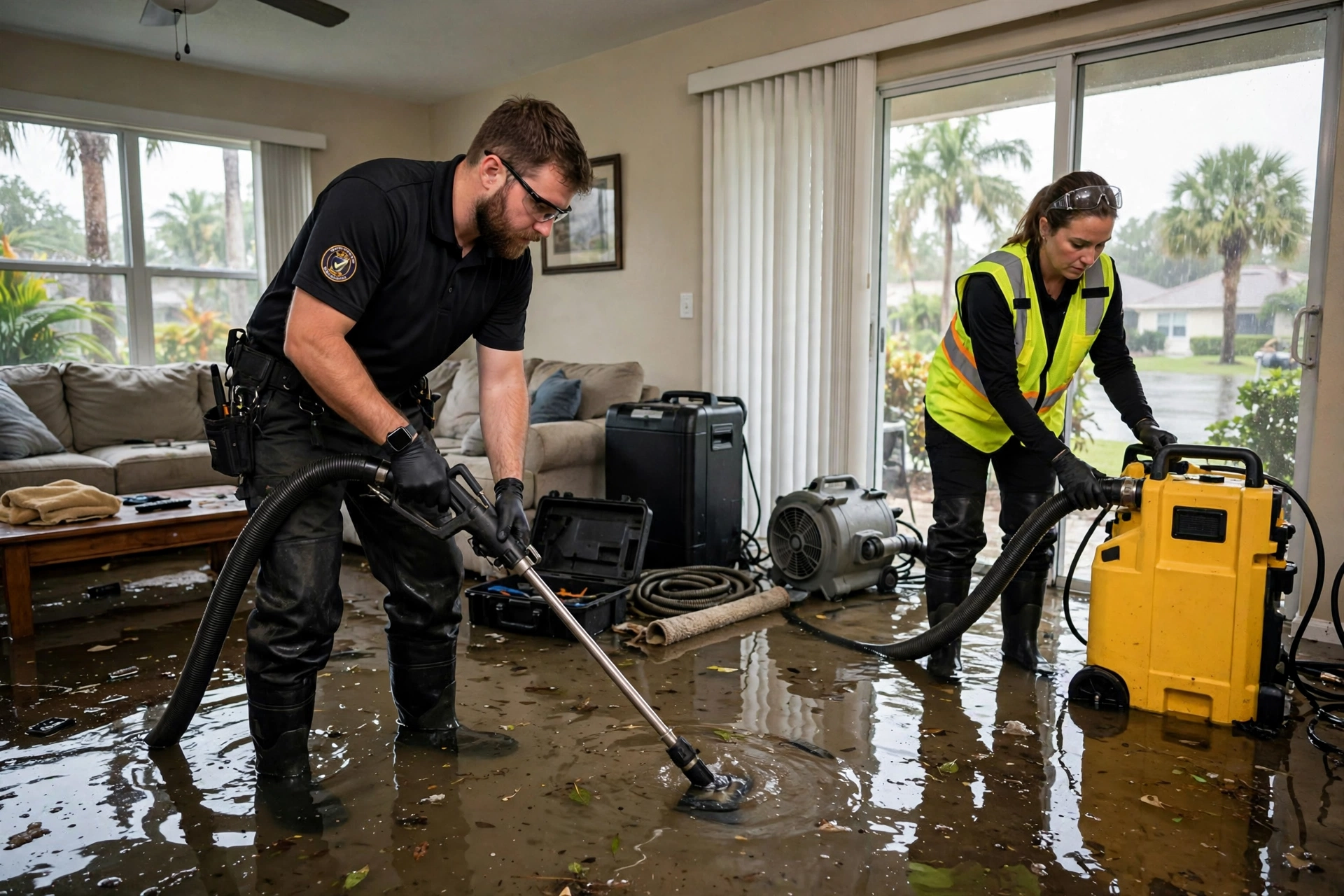
First the crew protects unaffected rooms and moves or blocks furniture. Then standing water is removed with truck-mounted or portable extractors, carpet and pad are treated with weighted extraction tools, and water trapped under hard flooring is pulled with specialty systems. Baseboards may be detached and small inspection holes drilled at floor level so wall cavities can release water and dry. Extraction ends with a full moisture re-check that sets the drying plan. Details on our water extraction service page.
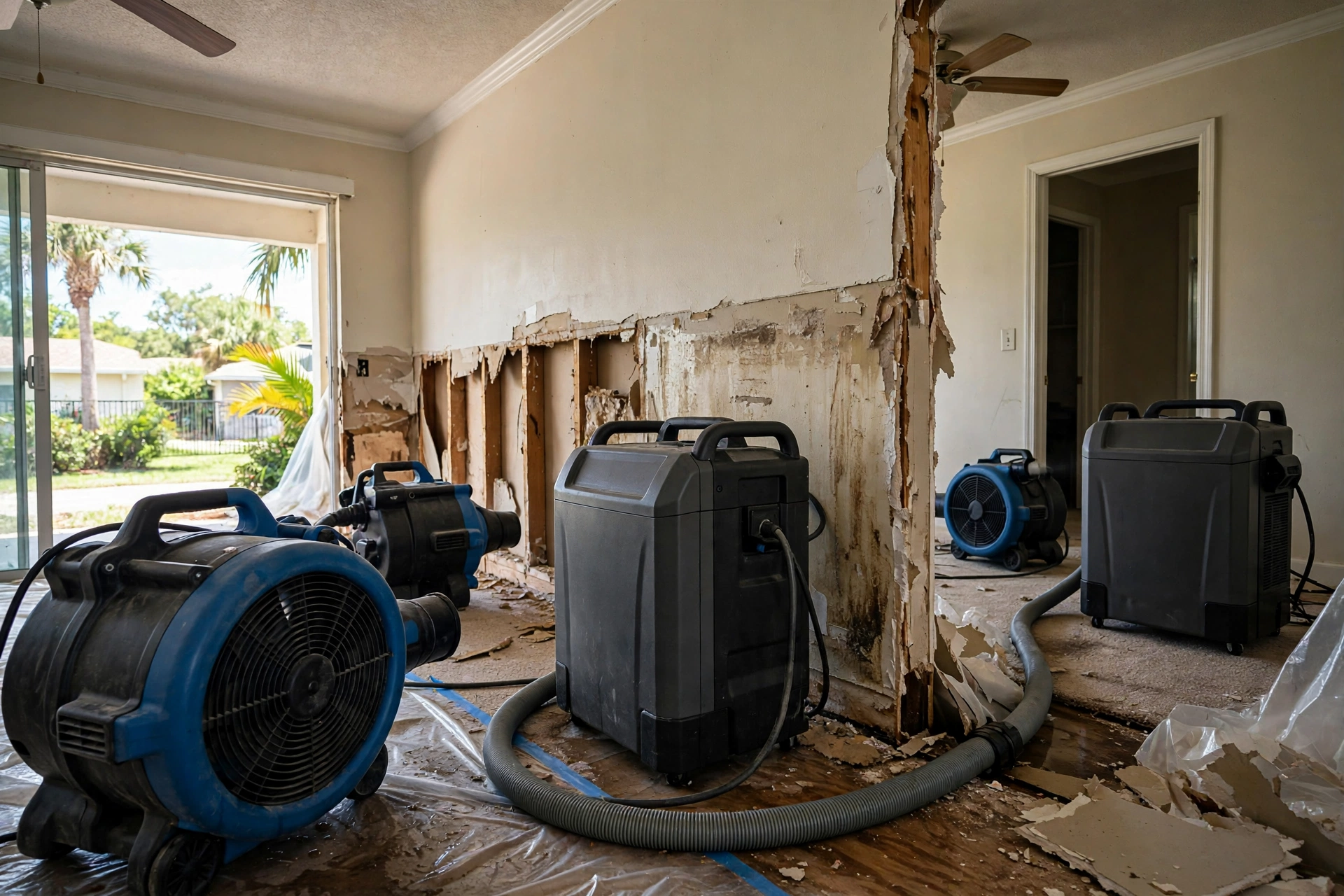
Structural drying uses commercial air movers to push air across wet surfaces and refrigerant or desiccant dehumidifiers to pull that moisture out of the air, controlled by psychrometrics, the science of temperature, humidity and airflow. Equipment placement is calculated per room, not guessed. Verification is by meter: daily moisture readings on every affected material, compared against the dry standard from unaffected parts of the same home. Drying is done when readings meet the goal, not when a timer runs out. See structural drying in detail.
Every day while equipment runs. A technician visits to record moisture readings, check temperature and humidity, reposition or add equipment if readings stall, and photograph progress. These daily logs protect your home, because slow spots get caught early, and they protect your claim, because they prove the drying was necessary, monitored and effective.
Once the structure is verified dry, repairs begin: replacing any drywall, insulation, flooring or cabinetry that had to be removed, reattaching baseboards, painting, and reinstalling fixtures. Because the same team handled mitigation and documentation, the repair scope matches what was actually removed, which keeps the rebuild fast and keeps your insurer's scope aligned with the work.
A straightforward loss, one or two rooms from a burst pipe, is typically 3 to 5 days of drying plus a few days of repairs, so about one to two weeks total. Larger floods, multi-room losses or jobs needing flooring and cabinet replacement can take 2 to 4 weeks. The free inspection gives you a realistic timeline for your specific job before work starts. Our blog also breaks down how long restoration takes by phase.
Usually not. Extraction and drying run in the affected rooms while the rest of the home stays usable, though drying equipment is loud and rooms under drying are off limits. If the loss covers most of the home, the water is contaminated, or water and power must stay off, a short stay with family or in a hotel may be safer and sometimes covered by the additional living expense portion of your policy.
By numbers, not by feel. Technicians compare moisture readings in affected materials against the dry standard, the moisture content of the same materials in unaffected rooms. When every affected reading reaches that target range, the structure is dry. Surface dryness lies: drywall can feel dry on the face while the cavity behind it is still soaked, which is why meters, not fingertips, make the call.
You receive the complete job file: before and after photos, the moisture map from the inspection, daily drying logs with final verified readings, the itemized scope of work in Xactimate format, and invoices that match that scope. Keep the file with your insurance records; it is your proof that the loss was handled to standard, and it supports any supplemental claim you may file later.
Start with phase one: a free inspection
Moisture mapping, photos and a written scope, at no cost and with no obligation. Know exactly where you stand today.
Call 24/7: (607) 300-1334