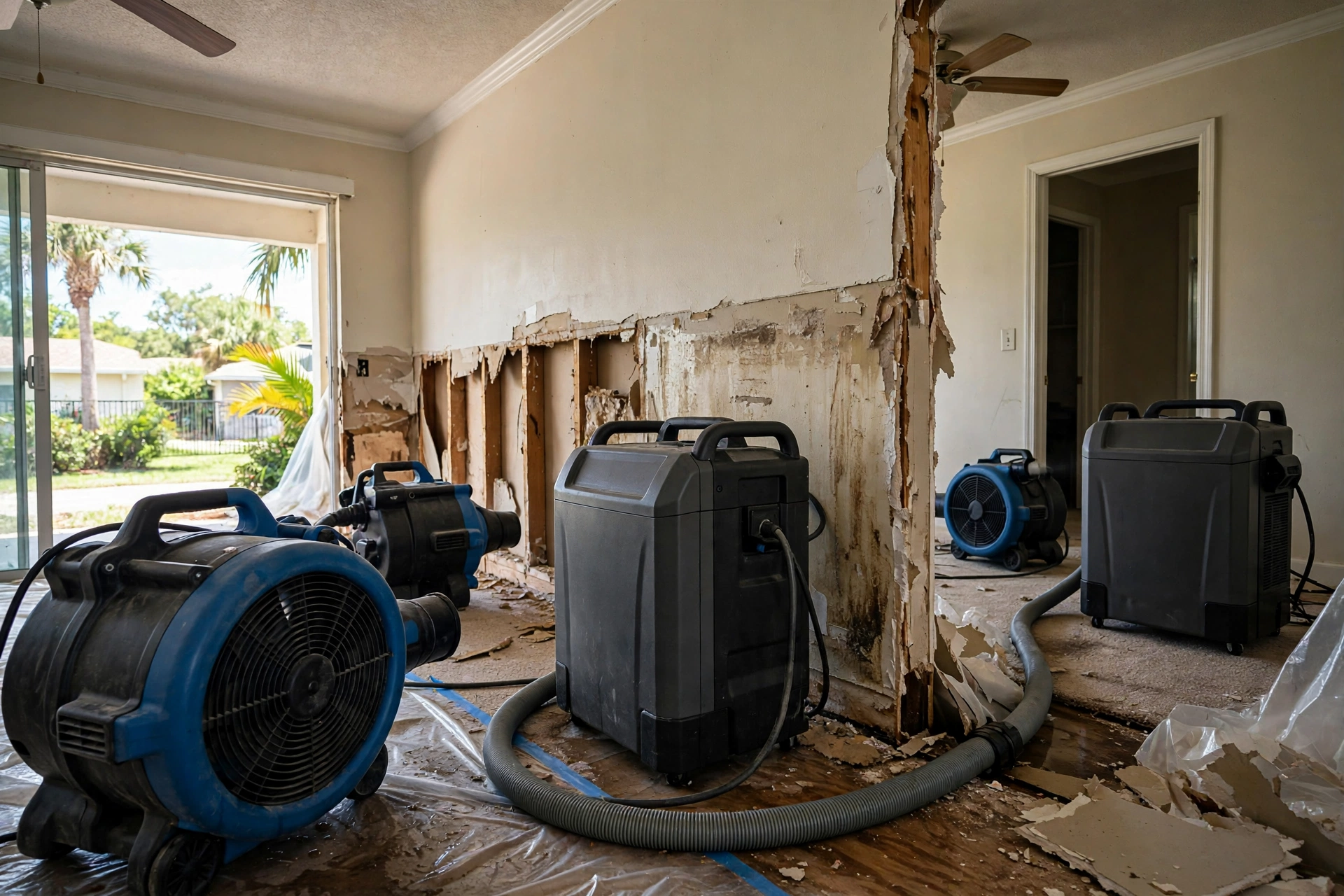
A typical water damage restoration takes 3 to 5 days of drying after same-day extraction, followed by a few days to two weeks of repairs depending on what was damaged. Small one-room losses can finish inside a week; whole-home floods with flooring and cabinet replacement usually take 2 to 4 weeks. Drying ends when moisture meters reach the dry standard, not on a fixed schedule.
It is the first question every homeowner asks, and the honest answer is a range, not a date. Water damage restoration runs on physics: water has to move out of wood, drywall and concrete at the speed those materials release it, and repairs can only start when meters prove things are dry. This guide breaks the timeline into phases so you know what to expect, what is happening while equipment hums in your hallway, and where the schedule typically stretches or shrinks.
What does the water damage restoration timeline look like, phase by phase?
Day one is the emergency phase: response, moisture mapping, extraction and drying setup, usually all within a few hours of your call. Days two through five are the drying phase: air movers and dehumidifiers run continuously, and a technician visits daily to record moisture readings and adjust the setup. When readings reach the dry standard, equipment comes out and the repair phase begins: drywall, paint, flooring, cabinetry and trim, anywhere from a few days for a small loss to several weeks for multi-room reconstruction. The final half day is verification and walkthrough, where you receive your documentation file.
In a straightforward burst pipe job, you are often at one to two weeks door to door. The single biggest mistake that breaks this timeline is starting late. Water that sat for a week before extraction has usually wicked far enough that demolishing wet materials, and rebuilding, adds days at every phase.
Why does drying usually take 3 to 5 days?
Because building materials release water at different, stubborn rates. Drywall and carpet dry quickly; hardwood, engineered flooring, plaster, concrete slabs and cabinet boxes hold moisture and release it slowly. Professional structural drying is not just blowing air. It balances airflow, temperature and dehumidification in a controlled system, a process called psychrometrics, and checks moisture content daily against the moisture content of unaffected materials in the same home. Pulling equipment early because the surface feels dry is how hidden cavities stay wet and become mold colonies behind freshly painted walls. The 3-to-5-day window is what measured dryness actually takes in most Florida homes.
What factors make water damage restoration take longer?
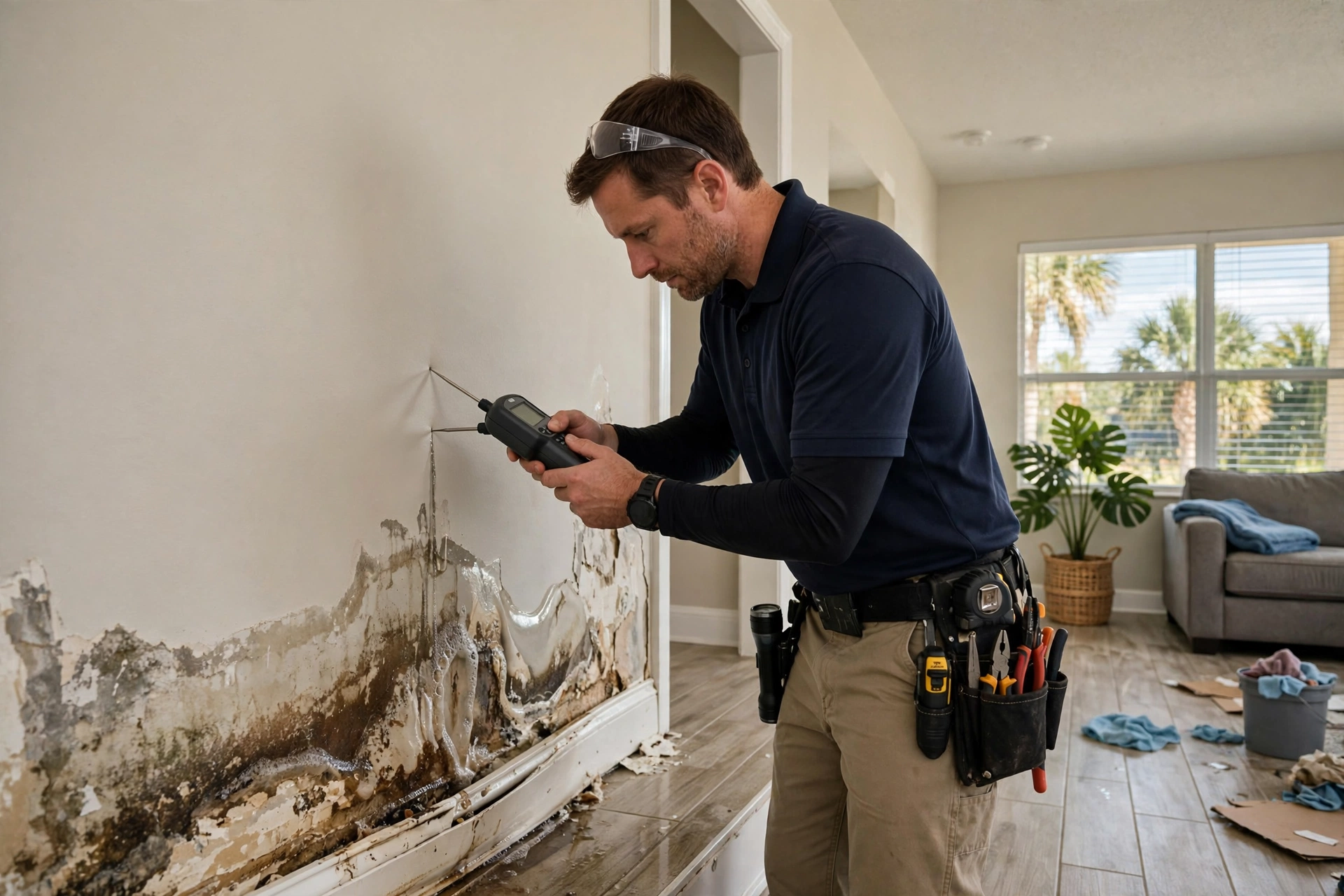
Five things stretch a timeline. The first is delay: water found days or weeks later, common in vacation homes and rentals, means wicking and saturation have already done their work. The second is the amount of water and rooms involved; a supply line that ran for eight hours is simply a different job than a brief spill. The third is material type, like hardwood over slab, concrete assemblies, or tile set over wood subfloors, all slow to dry. The fourth is water category: contaminated water forces removal of porous materials rather than drying in place. And the fifth is scope surprises, like discovering a second, older leak behind the wall during demolition. Your inspector will flag these risks on the first visit and give you a realistic schedule for your specific loss.
Can you stay in your home during the restoration?
Usually, yes. Extraction and drying normally run in the affected rooms while the rest of the house stays in normal use. The honest caveats: drying equipment is loud, the affected rooms are closed off, and Florida homes heat up if the AC has to come off. If the water is contaminated, the damage spans most of the home, or utilities are shut off for safety, a short stay elsewhere makes more sense, and additional living expense coverage in many Florida policies can help with that cost. Your crew will give you a straight recommendation during the inspection, because the answer depends entirely on your layout and the loss.
What slows down the insurance side of the timeline?
Claim paperwork rarely delays the emergency work, which should start immediately; your policy actually requires you to mitigate. Where insurance affects scheduling is the repair phase: large rebuilds may wait on adjuster scope approval, and after major storms, adjusters are working hundreds of files. What keeps this moving is documentation quality. Photos, moisture maps, daily logs and an Xactimate scope that matches the adjuster's own estimating software remove most back-and-forth. Read our insurance claim timeline guide for the full sequence, including Florida's one-year notice deadline and the 18-month supplemental window.
How can you keep your restoration on the shortest possible timeline?
Call fast. Extraction within the first hours instead of the first weekend is the single biggest schedule saver, because it prevents spread, saturation and mold growth, which can start in 24 to 48 hours in Florida humidity. Stop the water source, photograph everything before cleanup, and keep access clear for the crew. During drying, leave the equipment running and resist turning it off at night; every hour off is an hour added. Finally, decide materials early: flooring, paint colors and cabinet choices made during the drying phase mean repairs start the day equipment leaves. If you are in Orlando, Miami, Tampa, Jacksonville or any of our 293 service areas, response is local and fast. The clock is already running on any water loss; a free inspection tells you exactly where your timeline stands.
Do condos, rentals and commercial spaces take longer?
Yes, and the extra time has little to do with the water itself. In a Florida condo, stack-effect plumbing means a leak on the eighth floor can wet six floors below, and each unit needs separate access, separate drying and separate documentation. HOA approvals add days: many associations require board sign-off before demolition or reconstruction starts, and elevator reservations for equipment movement. Rentals add a human delay, because tenants must coordinate access and relocation decisions flow through owners or property managers. Commercial spaces add business-hours constraints and stricter documentation. The physical drying takes the same 3 to 5 days, but approvals and access can add a week or more to the total schedule. If you manage a condo or rental, line up the decision-makers early: board contact, insurance certificate requirements and access authorization, and hand them to your crew on day one. For landlords and HOAs, our local service pages cover how dispatch handles multi-unit losses.
What does a realistic schedule look like for the most common jobs?
It helps to see typical numbers. A burst washing machine hose in one laundry room: extraction and setup on day one, drying days two through four, minor drywall repair days five and six, paint and final check day seven. A slab leak under tile in a living room: extraction and leak repair days one and two, drying days three through seven because concrete holds moisture, flooring replacement days eight through fourteen. A roof leak that soaked an attic and two ceilings: inspection and tarping day one, extraction and drying days two through six, drywall and insulation replacement days seven through twelve, paint and trim day thirteen. A ground-floor flood after a storm: contaminated-material removal days one and two, drying days three through seven, rebuild weeks two through four. These are typical, not promised, but they reflect how the physics actually sequences. Your water damage restoration crew confirms your specific timeline on the first visit, and daily meter readings keep it honest as the job runs.