How Much Does Water Removal Cost in Florida?
Standing water, a ticking clock, and the first question every Florida homeowner asks: what is this going to cost? Here are the real 2026 numbers, what drives them up or down, and the moves that keep a water bill from doubling.
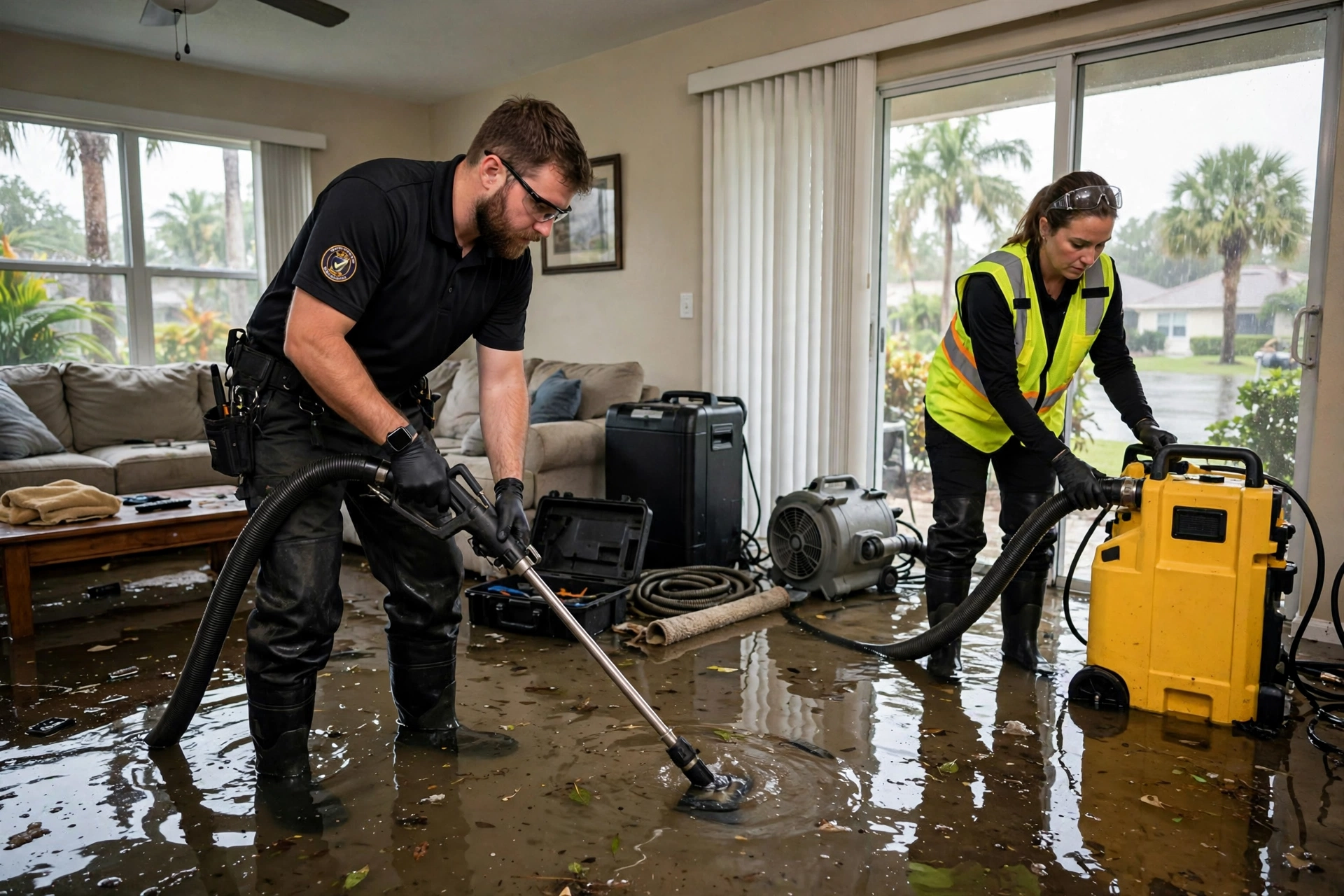
Professional water removal in Florida typically costs $3 to $7 per square foot of affected area. A single flooded room often totals $500 to $1,500 for extraction alone; a whole-home event runs $3,000 to $10,000 or more once drying is included. Clean water costs least, contaminated flood or sewage water costs most.
What are the typical water removal prices in Florida?
Most professional water removal services price extraction by the square foot of wet area, and the 2026 Florida range is $3 to $7 per square foot. A small bathroom leak caught early, around 100 square feet of impact, might mean a $400 to $700 visit. A flooded living room and hallway, 400 to 600 square feet, usually lands between $1,400 and $3,500. Multi-room and whole-home events in cities like Miami and Tampa regularly reach $4,000 to $10,000 before any repair work begins.
Those numbers cover getting the water out. They do not include drying equipment days, demolition of unsavable materials, or the rebuild, which is why comparing a removal quote against a full restoration quote is apples to oranges.
What drives the water removal cost up or down?
Five factors decide where your job lands in the range. First, water category: Category 1 clean water from a supply line is the cheapest to handle; Category 3 flood or sewage water requires protective gear, containment and disposal, and costs the most. Second, depth and spread: two inches across three rooms is a different job than a soaked carpet pad in one. Third, time of day: emergency water removal at 2 a.m. carries after-hours rates, though it is almost always cheaper than waiting, because water spreads and mold risk starts within 24 to 48 hours in Florida humidity.
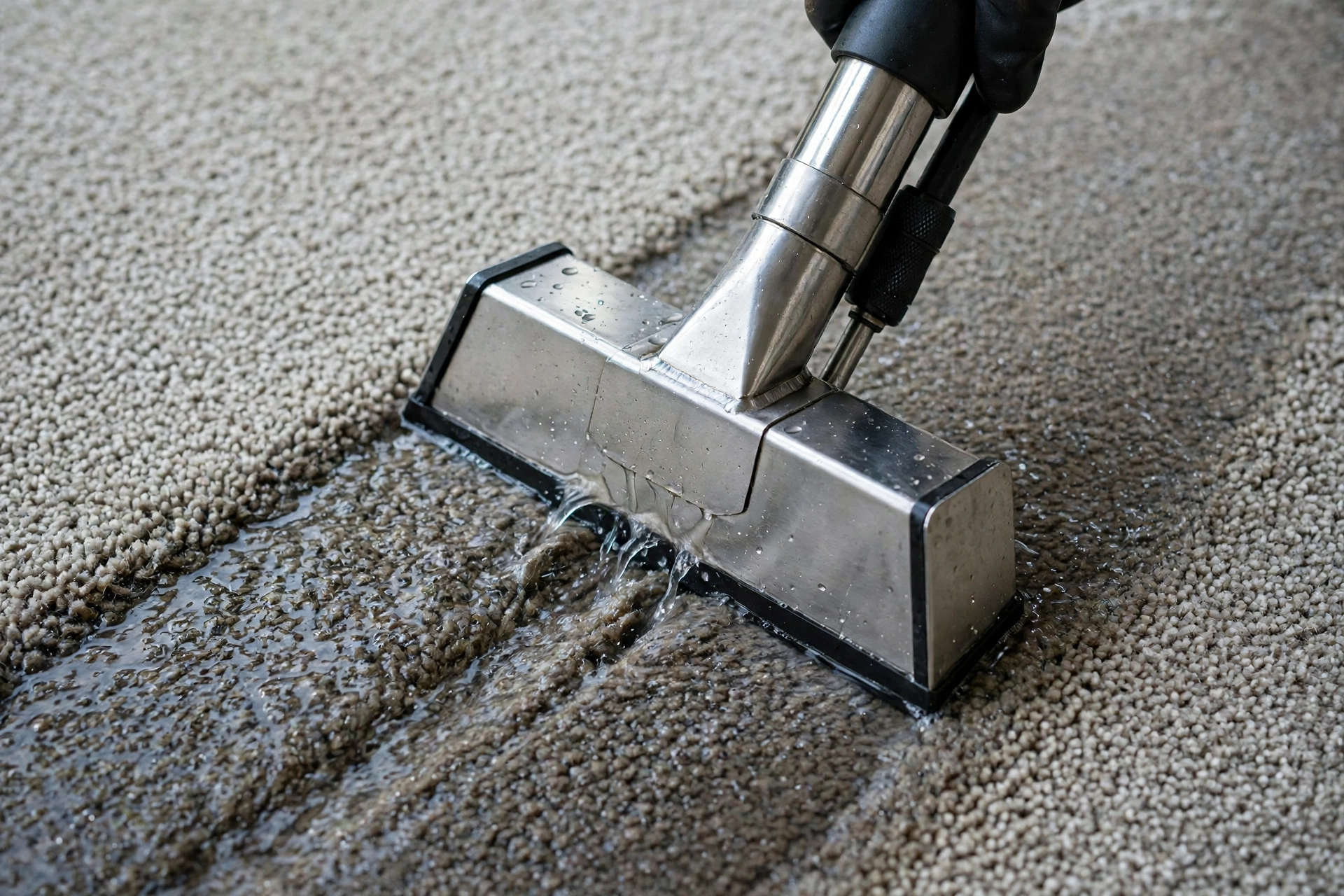
Fourth, access: a ground-floor slab home extracts faster than a downtown condo with elevator bookings and association rules. Fifth, materials: tile and concrete release water quickly; hardwood, laminate and carpet with pad hold it and take longer to extract and dry.
How do extraction and drying costs split?
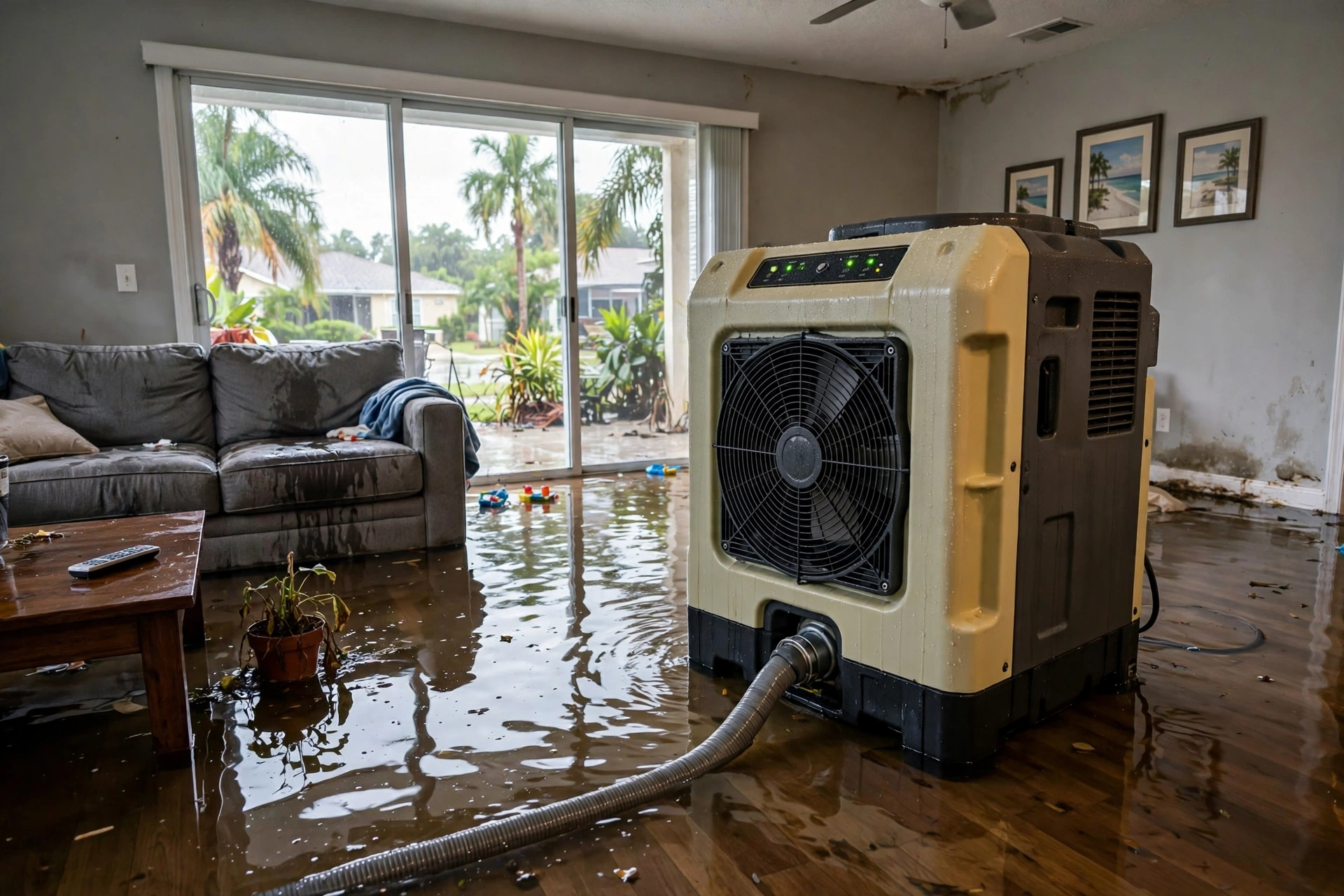
Think of the bill in two parts. Extraction, the removal visit itself, is the $3 to $7 per square foot piece and usually happens in one visit of a few hours. Drying is billed as daily equipment rental plus monitoring visits: air movers and dehumidifiers typically add $300 to $800 per day for a residential setup, running three to five days. So a mid-size job often breaks down as roughly 40 percent removal, 60 percent drying. Our water extraction page lays out what happens in each phase, and our timeline guide shows how long each phase takes.
Does insurance cover water removal in Florida?
Usually, yes, for sudden and accidental water events: a burst pipe, a failed supply line, an appliance overflow. Homeowners policies generally cover the removal and drying as mitigation, and most require you to mitigate promptly. What they do not cover is the failed part itself (the old pipe is yours), gradual leaks ignored for months, or floodwater from outside, which needs a separate flood policy. Keep every invoice and moisture log; our insurance claims assistance team builds the documentation file adjusters ask for.
How can you keep the water removal bill down?
Four moves make a measurable difference. Stop the source: know your main shutoff and use it the moment you see water, because every running hour adds square feet. Call fast: a same-day extraction prevents the spread and the mold treatment that can cost more than the removal itself. Photograph everything before and during cleanup, dated and wide-angle, so the insurer does not discount the claim for missing proof. And do not tear out wet materials yourself before the crew documents them; undisclosed demolition is a common reason claims get reduced.
When is a cheap quote actually expensive?
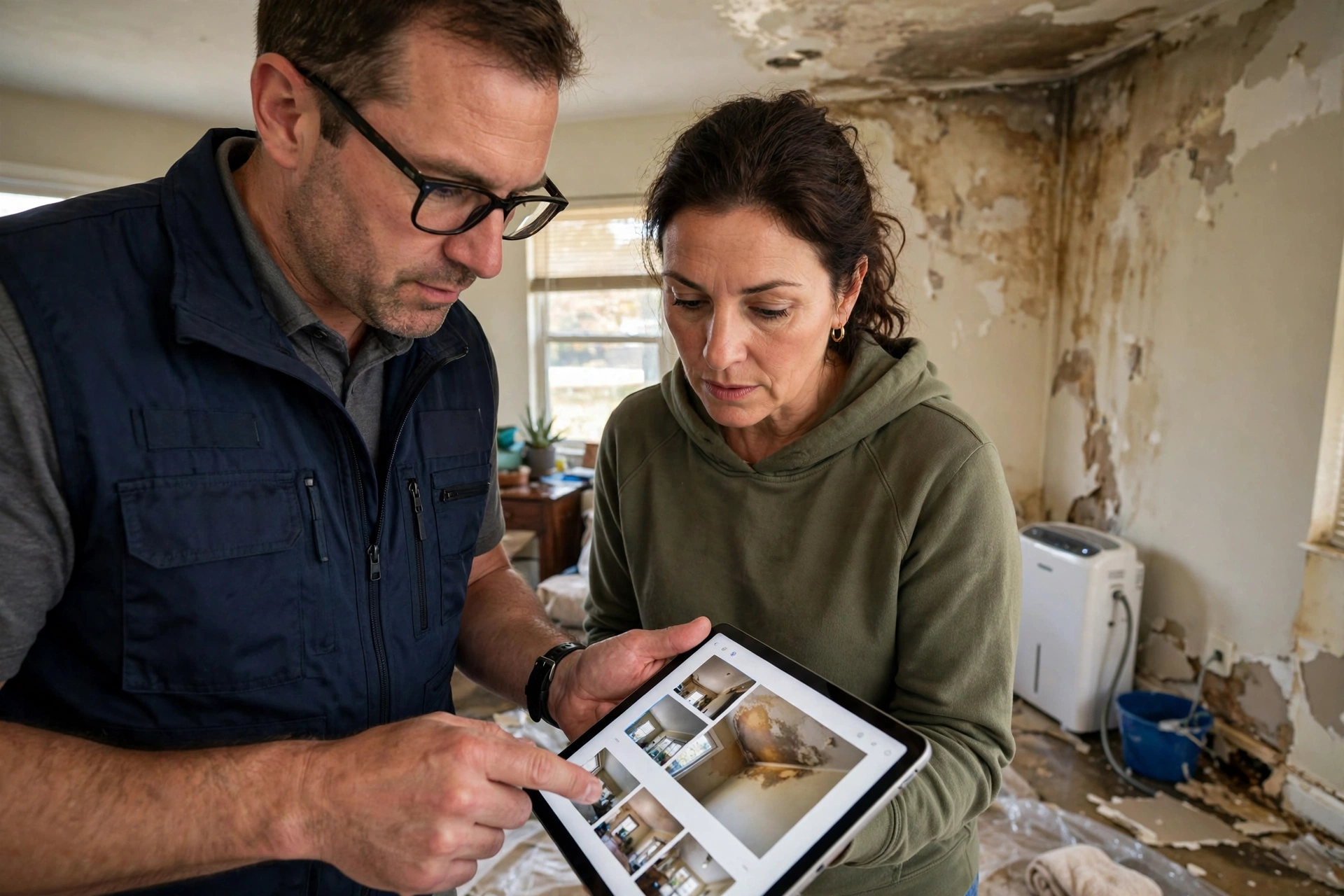
When it skips measurement. A quote with no moisture mapping, no category assessment and no drying plan is guessing, and the corrections land on you later as mold remediation or a denied claim. The right question is not "who is cheapest per square foot" but "who documents, dries to verified targets, and prices each phase in writing before work starts."
What does a real invoice look like, line by line?
Take a common job: a supply line floods a 500-square-foot living room and hallway with clean water, caught within hours. A typical invoice reads: emergency extraction of 500 square feet at $4.50, about $2,250; baseboard removal and disposal, $300; antimicrobial treatment, $250; drying equipment for four days (six air movers, two dehumidifiers, daily monitoring), about $1,900. Removal and drying together: roughly $4,700, before any repair work. The same flood left for two days in August heat adds demolition, mold precautions, and two more drying days, and the same room quietly becomes an $8,000 job. That gap is the entire economics of water damage: the water is cheap to remove early and expensive to remove late.
Should you pay out of pocket or file a claim?
Run the deductible math. If the total job is $2,000 and your deductible is $2,500 (or a percentage-based hurricane deductible, which can be far higher), paying out of pocket is usually cleaner and keeps the claim off your record. If the job is heading past $5,000, or walls and multiple rooms are involved, filing is normally the right call, and the mitigation part is exactly what the policy exists for. Either way, get the inspection and the written quote first: the numbers make the decision obvious, and both insurers and honest companies expect documentation either way.
Does it cost more in South Florida?
Slightly, and mostly for access reasons rather than labor. Miami-Dade and Broward have more high-rise and gated properties, where elevator reservations, association paperwork, parking and water shutoff coordination add hours to a job. Inland and suburban homes on slab foundations are the fastest and cheapest to extract. None of that changes the per-square-foot mechanics, but it is why the same flooded room can price a few hundred dollars apart between a suburban house and a downtown condo.
One last note on estimates?
Treat every phone quote as a range, not a promise, including ours. Nobody can price water they have not measured, and the honest companies say so. The number that counts is the written one after inspection, with the category, the affected area and the drying plan spelled out. That is the quote your insurer will work from, and the one you can hold the company to.
Need water out now? Get the real number first.
Free on-site inspection and a written, per-phase quote before any work begins. 293 Florida cities, 24/7.
Call 24/7: (607) 300-1334