Water Damage Safety FAQ: Protecting Your Family First
Electrical hazards, contaminated water categories, when to leave the property, and how to protect children and pets while a home is wet.
The risks in a wet home are electrical, biological and structural
Keep people out of standing water that touches anything electrical, treat all flood water and drain backups as contaminated, and leave immediately if you smell gas, see sparking, or notice a sagging ceiling. Children and pets should stay out of affected rooms until cleanup and drying are verified complete.
Emergency rule: If you smell gas, see sparking, or anyone feels unwell in a water-damaged home, get out and call 911 first. Call us second, at (607) 300-1334. No belonging is worth an injury.
The questions below explain each hazard in plain language and the exact steps to take. For the shutdown steps in the first minutes of a leak, see the emergency response FAQ.
Water damage safety questions, answered
It depends on the source, the size and the systems affected. A small clean-water leak in one room, with power safely managed, is usually fine to live around while professionals work. Contaminated water, damage across most of the home, loss of water or electricity, or anyone in the home with breathing problems or a weakened immune system changes the answer. Your inspection includes an honest recommendation about staying or leaving, at no cost.
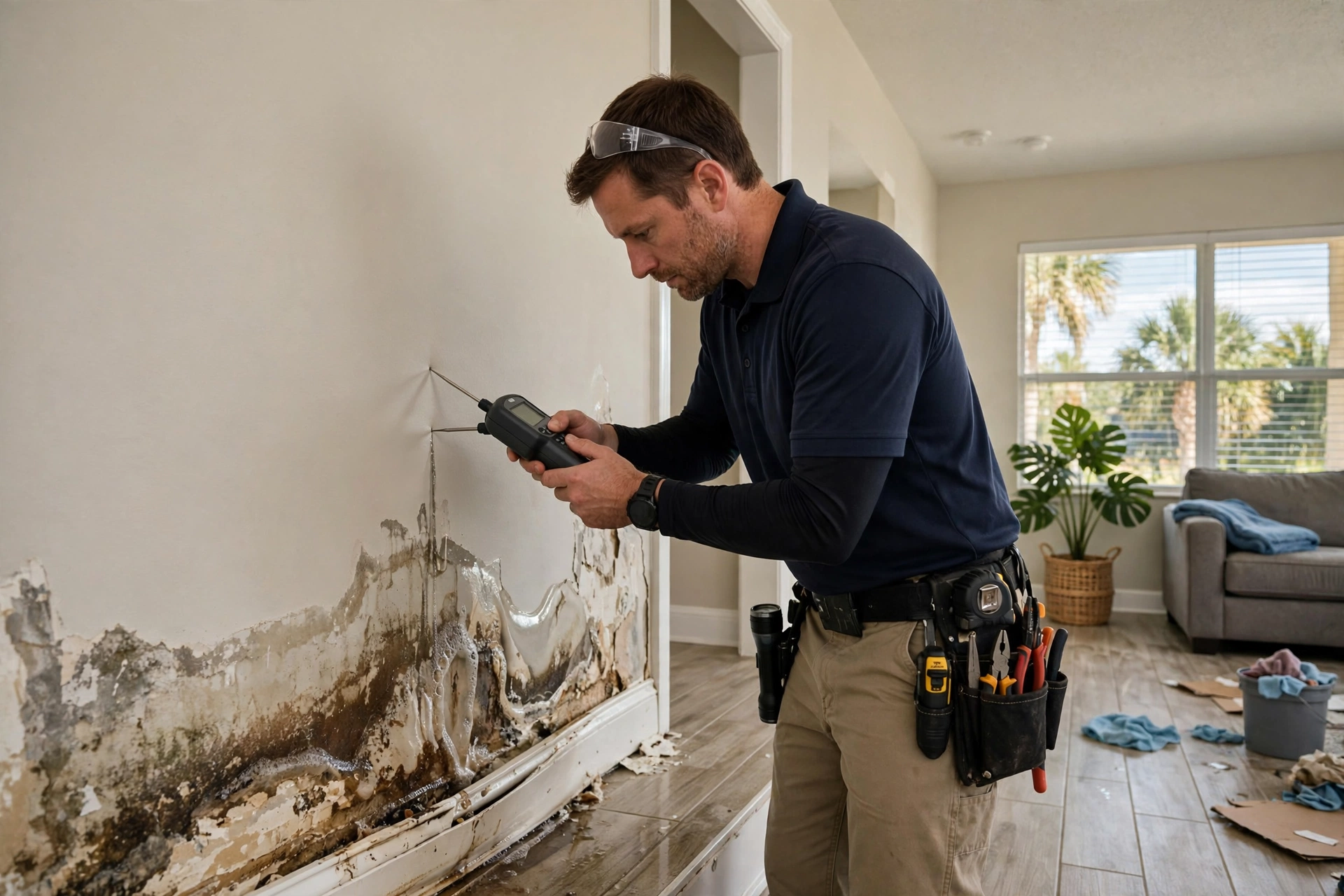
Standing water that reaches outlets, power strips, appliance cords or the electrical panel can become energized, and it gives no warning before it shocks. Water also corrodes wiring and connections, creating hazards that remain after the floor looks dry. Turn off breakers to wet areas if you can do so without crossing water, never touch a wet electrical panel, and let a licensed electrician clear any panel or wiring that got wet before it is used again.
Professionals judge by source. Water from supply lines starts as Category 1, clean. Water that passed through appliances, or sat long enough to pick up contaminants, becomes Category 2. Water from outside the home, including flood water, storm surge and drain backups, is Category 3, grossly contaminated, and treated with strict protocols. If you do not know the source, or the water has odor, color or debris, treat it as contaminated and stay out of it.
Leave and call 911 if you smell gas, see sparking or arcing, or hear buzzing from the electrical panel. Leave if ceilings are sagging or bulging with trapped water, if walls or floors feel structurally soft or shifted, or if contaminated water covers most of the living space. Also leave if anyone feels dizzy, nauseated or unwell in the home. Property can be restored; people cannot be replaced.
Yes. Children play at floor level, put hands and objects in their mouths, and breathe faster relative to their size, so they contact more of whatever the water carried in. Pets walk through wet areas and groom themselves afterward. Keep both out of affected rooms until cleanup and drying are complete and surfaces are verified clean. Move food bowls, bedding and toys out of wet areas immediately, and wash anything that contacted flood water.
It is a bad idea. Flood water hides sharp debris, displaced drain covers, and contamination you cannot see, and it may be energized by submerged electrical sources. If you must retrieve medication or essential documents and the water is shallow clean water far from outlets, wear rubber boots and gloves and wash thoroughly afterward. For anything else, wait: belongings can be cleaned, dried or replaced, and our crews routinely recover and document contents safely as part of the job.
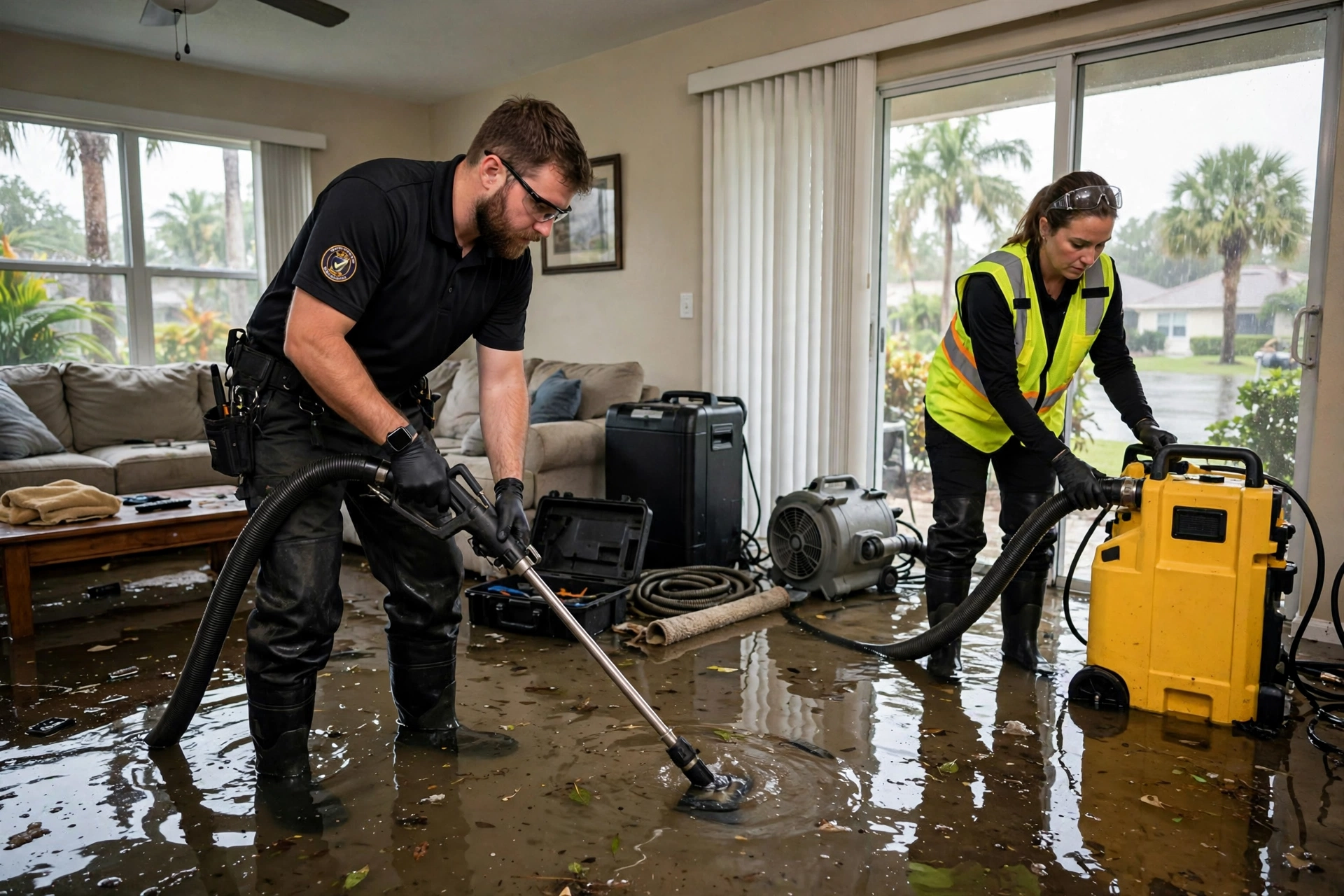
Crews wear waterproof boots, puncture and chemical-resistant gloves, eye protection, and respirators rated for the conditions, up to full protective suits on contaminated losses. The gear exists because flood and backup water can carry bacteria, chemicals and sharp debris, and because drying work disturbs settled contaminants in dust. Professional PPE and containment are the difference between cleaning a hazard and spreading it through the rest of the house on shoes and clothing.
Not until the system is checked. If the air handler, ductwork or condensate pan took water, running the AC can distribute moisture and contaminants through every room the ducts serve, and can worsen an electrical fault. If the unit stayed dry and the damage is elsewhere, the AC often helps overall conditions, but the crew will confirm. This matters doubly in Florida, where the AC is also the usual suspect: a clogged condensate line is one of the most common water damage sources we find. See AC leak water damage.
Leave the home immediately, from the nearest safe exit, without touching switches, appliances or anything electrical. Once you are outside and clear of the building, call 911, then your gas utility if you have one. Do not re-enter for belongings, pets can be handled by responders if needed, and do not go back in until emergency services clear the property. Water can damage gas lines and electrical systems in ways that are invisible from the doorway.
Not sure if your home is safe?
Call and describe what you are seeing. A dispatcher will tell you honestly whether to wait outside or whether a crew can make it safe today.
Call 24/7: (607) 300-1334